




Menu

Hidden Moisture Detection in Cincinnati – Expert Diagnosis Before Structural Damage Spreads

Thermal imaging and moisture meters pinpoint trapped water behind walls, under floors, and in ceiling cavities across Cincinnati homes before you face expensive structural repairs or toxic mold growth.

Slider Image 1
Slider Image 2
Slider Image 3
Slider Image 4
Slider Image 5
Slider Image 7
Slider Image 8
Slider Image 9
Slider Image 10
Slider Image 11

The Silent Threat Hiding in Your Cincinnati Home

You smell it first. That damp, earthy odor that won't go away. Or you notice a stain spreading across your ceiling, but the roof looks fine. Maybe your water bill climbed for no clear reason.

Cincinnati's humid summers and freeze-thaw winters create the perfect environment for hidden water problems. Condensation builds in crawl spaces during July and August when humidity routinely hits 75 percent. Come January, pipes freeze in uninsulated exterior walls common in older Hyde Park and Mount Adams homes. The damage happens out of sight.

Detecting invisible leaks before they rot floor joists or dissolve drywall requires more than a visual inspection. Water travels. A slow drip behind a kitchen wall can migrate 15 feet laterally before showing surface damage. By then, you're looking at structural repairs, not just cosmetic fixes.

Spotting hidden water damage means finding trapped water in ceiling cavities after ice dams form on your roof. It means locating concealed dampness behind tile surrounds where shower pan liners failed. It means identifying unseen water intrusion through foundation cracks opened by Cincinnati's clay soil expansion and contraction cycles.

The longer water sits, the worse it gets. Drywall starts breaking down within 48 hours. Mold colonizes within 72 hours. Wood framing loses structural integrity within weeks. You can't fix what you can't find. That's why finding trapped water early changes everything.

Your nose and eyes catch obvious problems. Professional moisture detection catches the ones that cost you thousands later.

The Silent Threat Hiding in Your Cincinnati Home
How We Find Water You Can't See

How We Find Water You Can't See

We don't guess. We measure.

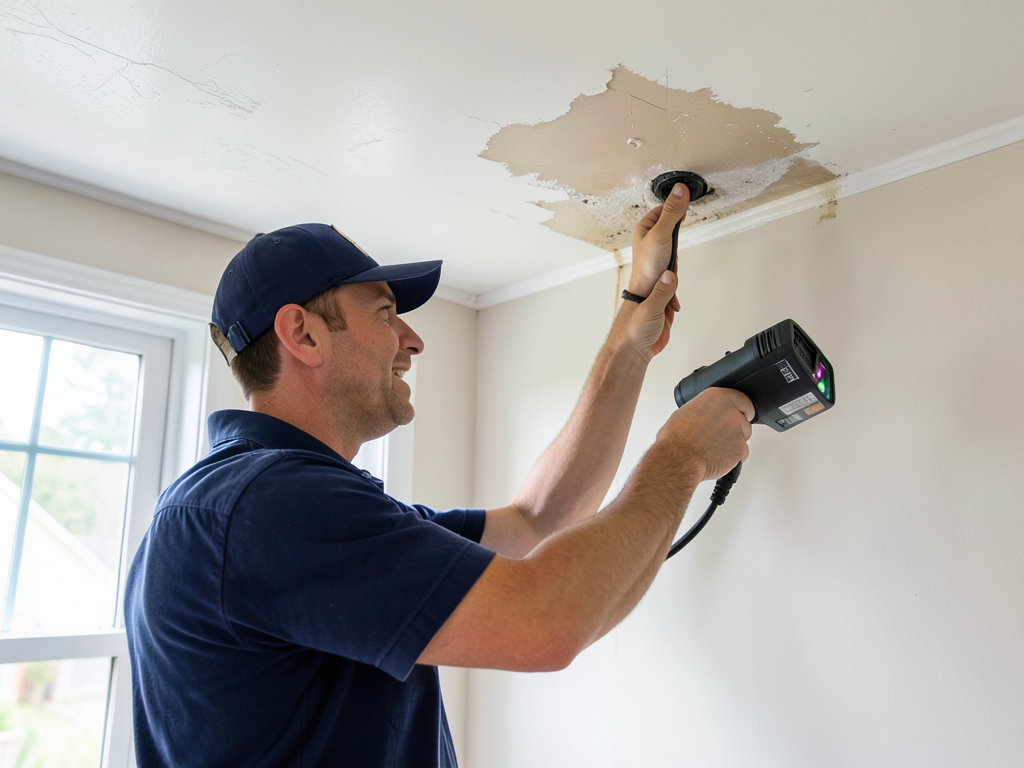
Ace Water Damage Restoration Cincinnati uses infrared thermal imaging cameras that detect temperature differentials as small as 0.1 degrees. Wet building materials conduct heat differently than dry materials. We scan walls, floors, and ceilings to map thermal signatures that indicate moisture presence behind finished surfaces.

Thermal imaging shows us where to look. Moisture meters tell us how bad it is. We use pin-type meters that penetrate surfaces to measure electrical resistance between two probes. Higher moisture content means lower resistance. We get precise readings at different depths to determine if water penetration reached studs, subfloors, or insulation.

For non-invasive scanning through tile, hardwood, or finished surfaces, we deploy pinless moisture meters. These use electromagnetic sensors to detect moisture up to three-quarters of an inch deep without puncturing your walls or floors.

But technology alone doesn't find every problem. We combine equipment with experience. We know Cincinnati homes. We know where builder-grade vapor barriers fail in basements. We know which HVAC installations in older homes create condensation problems. We know how settling foundations in neighborhoods built on hillsides create entry points for groundwater.

We start exterior and work in. We check grade slopes, downspout drainage, foundation perimeter conditions. We inspect attic ventilation and insulation. We trace plumbing runs and check valve connections. We examine areas where different building materials meet, where expansion and contraction create gaps.

Finding trapped water means understanding building science and how Cincinnati's climate stresses structures. We find problems others miss because we know where to look and what to look for.

What Happens During Your Moisture Detection Service

Hidden Moisture Detection in Cincinnati – Expert Diagnosis Before Structural Damage Spreads
01

Initial Site Assessment

We start with a detailed interview about what you've noticed: odors, stains, peeling paint, increased utility bills, or health symptoms. We review your home's age, construction type, and any previous water damage history. This conversation guides where we focus our technical inspection and helps us understand your specific concerns about potential moisture intrusion.
02

Comprehensive Scanning Protocol

We scan suspect areas with thermal imaging first to identify temperature anomalies that indicate moisture presence. Next, we take invasive and non-invasive moisture readings at multiple points to confirm water intrusion and determine saturation levels. We document everything with photos, thermal images, and moisture content percentages. You see exactly what we find in real time as we work through your property.
03

Written Report and Recommendations

You receive a detailed inspection report with all thermal images, moisture readings, and specific locations of water intrusion. We explain what's causing the problem and outline the scope of work needed to stop the source and remediate existing damage. We prioritize issues by severity so you understand what needs immediate attention versus what can wait. No surprises, no upselling.

Why Cincinnati Property Owners Choose Ace for Moisture Detection

You need someone who understands Cincinnati construction. The masonry foundation homes in Clifton have different moisture vulnerabilities than the slab-on-grade ranch homes in Anderson Township. The brick Tudor homes in Indian Hill develop different leak patterns than vinyl-sided colonials in West Chester.

We've worked in every Cincinnati neighborhood. We know the common failure points in homes built during different eras. We know that many homes built in the 1970s and 1980s lack proper vapor barriers in crawl spaces. We know that downtown condos converted from commercial buildings often have HVAC condensate drainage issues. We know that hillside homes in Mount Lookout and Mount Washington deal with groundwater intrusion other neighborhoods never see.

Local building codes matter too. Cincinnati requires specific drainage and waterproofing standards for new construction, but older homes were built to different standards. We know what was code when your home was built and where those older methods typically fail.

Experience with Cincinnati's climate gives us an edge. We've seen what happens when summer humidity meets inadequate ventilation. We've traced the source of ice dam damage after February cold snaps. We've diagnosed foundation cracks caused by clay soil swelling during spring rains and shrinking during August droughts.

We're not a national franchise following a corporate manual. We're Cincinnati water damage specialists who've spent years learning how this city's climate, soil, and building methods create unique moisture problems.

When you call Ace Water Damage Restoration Cincinnati, you get technicians who've worked in homes like yours hundreds of times. We find problems faster because we've seen them before. We recommend solutions that work long-term because we understand local conditions.

What to Expect from Our Moisture Detection Service

Fast Response Times

We schedule moisture detection inspections within 24 to 48 hours of your call. If you're dealing with active water damage or suspect an ongoing leak, we can often arrive same-day. The inspection itself takes one to three hours depending on your property size and the number of areas requiring investigation. We work around your schedule, including evenings and weekends. You don't wait days wondering if you have a serious problem while water continues damaging your home.

Thorough Property Evaluation

We inspect all areas of concern plus common problem zones you might not think to check. That includes attics, crawl spaces, basements, mechanical rooms, and areas around plumbing fixtures. We check behind appliances if needed. We examine exterior drainage and foundation conditions. You receive a complete picture of your property's moisture status, not just a quick scan of the obvious problem. We find secondary issues before they become emergencies.

Actionable Results and Documentation

You get more than just a verbal summary. We provide a written report with thermal images showing exactly where moisture exists behind surfaces. Moisture readings include specific percentages and depth measurements. We explain what the numbers mean in plain language. If repairs are needed, we outline the work required and explain why each step matters. This documentation helps with insurance claims if applicable and gives you confidence you're making informed decisions about your property.

Follow-Up Verification

After repairs or remediation work, we return to verify that moisture levels have returned to normal and no hidden pockets remain. This confirmation scan ensures the problem is completely resolved, not just covered up. We document the post-remediation conditions to establish a new baseline for your property. If additional issues develop, we compare new readings to this baseline to determine if problems are related to previous water damage or represent new intrusion.

Frequently Asked Questions

You Have Questions,
We Have Answers

Why does my phone say moisture detected when there is no moisture? +

Your phone triggers moisture alerts due to sensor residue or corrosion, not active water. Dust, lint, or charging port debris can create false positives. In Cincinnati's humid climate, condensation forms quickly on cold devices brought indoors. Clean the charging port gently with a dry toothbrush and inspect for visible debris. Let the phone air dry at room temperature for 30 minutes. If alerts persist after cleaning, the sensor may be damaged from previous water exposure. This requires professional device repair, not water damage restoration services for your home.

Do moisture detectors really work? +

Professional-grade moisture meters work reliably when calibrated and used correctly. Pin-type meters penetrate drywall to measure electrical resistance, while pinless meters scan surfaces using electromagnetic waves. Both detect moisture levels in wood, drywall, and concrete. Accuracy depends on material type and proper calibration. In Cincinnati homes, meters identify hidden moisture from roof leaks, foundation seepage, or plumbing failures before visible damage appears. Consumer-grade models vary in quality. Restoration professionals use commercial-grade equipment that costs thousands and undergoes regular calibration to ensure readings are accurate enough for insurance documentation and remediation planning.

How do I find out where my moisture is coming from? +

Start by inspecting common failure points in Cincinnati homes: basement walls after heavy rain, ceiling stains below bathrooms, crawl spaces with poor vapor barriers. Check exterior grading that slopes toward your foundation. Examine roof flashing around chimneys and valleys. Moisture often travels from the source, so wall stains may originate from roof leaks three floors above. Use a flashlight during rain to spot active intrusion. Professional moisture mapping with thermal imaging cameras and calibrated meters traces the exact path and origin. This diagnostic approach prevents treating symptoms while the source continues damaging your structure.

Is there a tool to detect moisture in walls? +

Pin-type and pinless moisture meters detect hidden water in drywall without demolition. Pin meters insert probes through paint to measure moisture content percentage. Pinless meters scan surfaces using electromagnetic fields to detect moisture up to one inch deep. Thermal imaging cameras reveal temperature differentials from evaporative cooling, showing wet areas as cool spots. In Cincinnati's older housing stock with plaster walls, non-invasive scanning prevents unnecessary damage during inspection. Professional restoration companies combine multiple tools for comprehensive detection. These instruments identify moisture before mold growth begins, which starts within 24 to 48 hours of water intrusion in humid conditions.

How do I bypass the moisture detection? +

You should not bypass moisture detection warnings on devices. These alerts protect charging circuits from short circuits and permanent damage. Forcing power through wet components causes corrosion and component failure. For phones or electronics, address the moisture source by cleaning ports and allowing complete drying. For home moisture detection systems, bypassing alarms ignores potential water damage, mold growth, or structural deterioration. Cincinnati's high humidity and freeze-thaw cycles create ongoing moisture challenges. Ignoring detection systems leads to expensive repairs later. If sensors malfunction repeatedly without moisture present, replace the faulty sensor rather than disabling the safety system.

Will the moisture detection go away on its own? +

Moisture alerts on devices may clear after drying, but structural moisture in homes does not resolve without intervention. Phone sensors reset once humidity drops and ports dry completely. This takes 30 minutes to several hours depending on exposure. However, water intrusion in walls, crawlspaces, or basements worsens over time. Cincinnati's 70 percent average summer humidity slows evaporation and promotes mold growth. Wet drywall and insulation remain damp indefinitely without active drying. Structural moisture requires dehumidification, airflow, and source repair. Waiting allows mold colonization, wood rot, and increased restoration costs. Address moisture immediately when detected in building materials.

What can throw off a moisture meter? +

Metal objects, electrical wiring, foil-backed insulation, and high mineral content in concrete skew moisture meter readings. Pin meters measure electrical resistance, so conductive materials create false highs. Different wood species and building materials require specific calibration settings. In Cincinnati homes, old plaster with metal lath produces inaccurate readings without adjustment. Surface moisture from recent cleaning or condensation differs from deep saturation. Temperature extremes affect sensor accuracy. Non-wood materials need material-specific correction factors. Professional restoration technicians adjust for these variables and take multiple readings at different depths to confirm actual moisture content versus interference from building components or environmental factors.

How long do moisture sensors last? +

Quality moisture sensors in building monitoring systems last five to ten years with proper maintenance. Battery-powered sensors need replacement every two to three years as power cells degrade. Sensor accuracy drifts over time, requiring annual calibration checks. In Cincinnati's climate with temperature swings and humidity fluctuations, sensors experience more environmental stress than moderate climates. Professional moisture meters used by restoration companies undergo calibration every six months to maintain accuracy. Cheaper consumer models may fail within one to two years. Lifespan depends on sensor type, exposure to moisture, and maintenance. Replace building sensors showing erratic readings or physical corrosion regardless of age.

What is the best moisture tester? +

Tramex, Protimeter, and Delmhorst manufacture professional-grade moisture meters used by restoration experts. Pin-type meters excel for precise depth readings in wood and drywall. Pinless meters scan larger areas quickly without surface damage. Combination models offer both functions. For Cincinnati homeowners, mid-range models from General Tools or Klein provide adequate accuracy for DIY inspection. Professional restoration requires commercial units with material-specific calibration, data logging, and thermal imaging integration. The best tool depends on your application. One-time inspection needs a basic pinless meter. Ongoing monitoring or professional work requires calibrated commercial equipment with documentation capabilities for insurance and remediation tracking.

Can mold grow in 50% humidity? +

Mold can grow at 50 percent humidity if other conditions exist. Mold needs moisture, organic material, and temperatures between 60 and 80 degrees. While 50 percent relative humidity alone does not support growth on dry surfaces, it promotes mold on damp materials from leaks or condensation. Cincinnati's climate reaches 70 percent outdoor humidity in summer, creating condensation on cold surfaces like basement walls and AC ducts. This localized moisture supports mold even when whole-house humidity reads 50 percent. Porous materials like drywall and wood hold moisture above surface readings. Control humidity below 50 percent and eliminate water intrusion to prevent mold colonization.

Why Cincinnati's Clay Soil and Humidity Make Hidden Moisture Detection Critical

Cincinnati sits on expansive clay soil that swells when saturated and shrinks when dry. This seasonal movement cracks foundations and creates gaps where groundwater seeps into basements. Combined with average annual rainfall exceeding 42 inches, homes here face constant moisture pressure from below. Summer humidity above 70 percent creates condensation in poorly ventilated crawl spaces and attics. Identifying unseen water intrusion before it compromises structural elements means understanding how local soil and weather patterns stress foundations, slabs, and building envelopes. Generic moisture inspections miss the patterns specific to Cincinnati's geology.

Cincinnati building codes have evolved significantly over the past 50 years. Many homes lack modern waterproofing and drainage systems that current code requires. Ace Water Damage Restoration Cincinnati understands these code changes and knows which construction methods were common during different building periods across neighborhoods from downtown to the eastern suburbs. We recognize failure patterns in older construction that newer technicians might overlook. Our familiarity with local building inspectors, code requirements, and common insurance claim procedures means smoother remediation projects and better outcomes for property owners who need both detection and repair services.
Water Damage Restoration Services in The Cincinnati Area

We are proud to serve the entire Cincinnati area, providing expert water damage restoration services wherever and whenever they are needed. We understand the unique challenges our local community faces and are committed to being there for our neighbors. View our service area on the map to see how we can assist you, or simply give us a call for immediate dispatch to your location.

Address:
Ace Water Damage Restoration Cincinnati, 1507 Dana Ave, Cincinnati, OH, 45207

Additional Services We Offer

Our news updates

Latest Articles & News from The Blogs

Finding the Source of a Slab Leak in Your Mack Home Slab leaks in Mack OH homes are more than…

Finding the Source of a Slab Leak in Your Mack Home

Finding the Source of a Slab Leak in Your Mack Home Slab leaks in Mack OH homes are more than…

What to Do When Your Water Heater Bursts in Madisonville

Emergency Water Heater Burst Cleanup in Madisonville, Cincinnati \n\n A water heater burst in Madisonville creates immediate flooding that can…

Salvaging Important Paper Documents and Photos After an Amberley Village Flood

Salvaging Important Paper Documents and Photos After an Amberley Village Flood When floodwaters rush through Amberley Village basements, the damage…

Contact Us

Hidden water damage doesn't fix itself. Every day you wait, more structural deterioration occurs behind your walls and under your floors. Call Ace Water Damage Restoration Cincinnati at (513) 717-2522 right now to schedule your moisture detection inspection and find out what's really happening in your home.