




Menu

Water Stains on Drywall in Cincinnati – Expert Diagnosis Before the Problem Gets Worse

Our technicians identify the true source of brown water spots, moisture discoloration, and yellow stains on your walls so you fix the root cause, not just the symptom, preventing long-term structural damage and mold growth.

Slider Image 1
Slider Image 2
Slider Image 3
Slider Image 4
Slider Image 5
Slider Image 7
Slider Image 8
Slider Image 9
Slider Image 10
Slider Image 11

Why Water Stains on Drywall Are a Red Flag in Cincinnati Homes

You see it on the ceiling, above the window trim, or creeping down from the second floor. Brown water spots on walls that started small and now spread weekly. Yellow stains on drywall that smell faintly musty. Moisture discoloration on sheetrock that never quite dries.

Cincinnati's climate creates the perfect storm for hidden water intrusion. Our humidity spikes hard in summer, often hitting 80 percent or higher. When that moisture meets temperature swings and older homes with settling foundations, water finds its way through cracks you cannot see. The Ohio River valley traps moisture against limestone bedrock, and many Cincinnati properties sit on clay soil that shifts with freeze-thaw cycles. That shifting cracks mortar joints, pulls flashing loose, and opens seams in older siding.

Water marks on ceiling drywall are not cosmetic problems. They signal active leaks from roof penetrations, failing plumbing stacks, or condensation from poorly vented bathrooms. Wet patches on plasterboard mean water is sitting inside your wall cavity right now, feeding mold spores and rotting wood framing. The longer you wait, the more expensive the fix becomes.

In older Cincinnati neighborhoods like Northside, Mount Adams, and Hyde Park, we see water stains caused by original cast iron plumbing that corrodes from the inside out. In newer developments near Liberty Township and Mason, we find stains from improperly installed HVAC condensate lines or missing kick-out flashing on complex rooflines. The stain is the symptom. The leak is the disease. You need both diagnosed correctly.

Why Water Stains on Drywall Are a Red Flag in Cincinnati Homes
How We Find and Fix the Real Problem Behind Your Water Stains

How We Find and Fix the Real Problem Behind Your Water Stains

Most homeowners try to paint over water stains. The stain bleeds through in two weeks. Others patch the drywall and hope the problem goes away. It does not. Ace Water Damage Restoration Cincinnati treats water stains as diagnostic clues, not isolated blemishes.

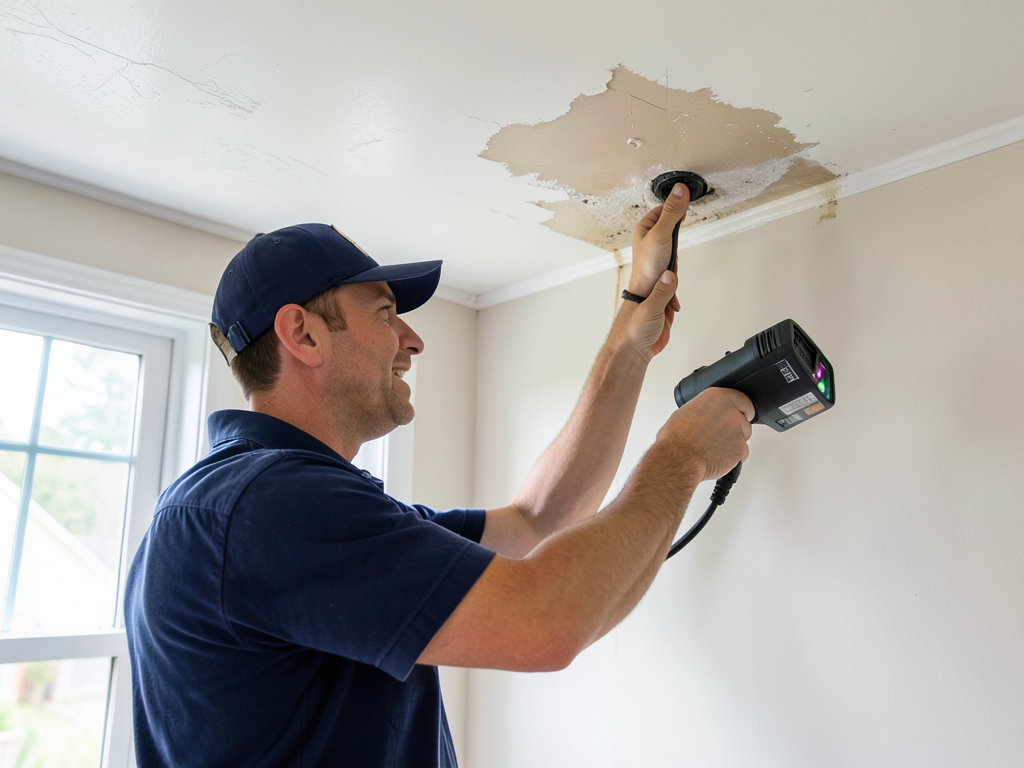
We start with thermal imaging cameras that detect temperature differentials behind your drywall. Wet insulation and soaked framing show up as cold spots invisible to the naked eye. We use moisture meters with pin probes that penetrate sheetrock and measure exact moisture content in the wall cavity. Anything above 17 percent moisture content signals active water intrusion. We map the moisture pattern to trace the leak back to its source, whether that is a roof valley two stories up or a slow drip from a second-floor shower pan.

Once we locate the source, we document it with photos for your insurance claim. We open the wall only as much as necessary to expose the damage and verify the scope. You see exactly what is wet, what is moldy, and what needs replacing. No surprises.

Our drying protocol uses commercial-grade dehumidifiers and air movers positioned to pull moisture out of wall cavities without spreading airborne spores. We monitor daily moisture readings until the structure returns to baseline, which in Cincinnati's humidity can take three to five days depending on airflow and insulation type.

After drying, we treat exposed framing with antimicrobial solutions to kill residual mold spores, then replace damaged insulation and drywall. We do not just patch. We restore the wall assembly to code, with vapor barriers reinstalled correctly and seams taped to prevent future cracking. The finished repair is invisible.

What Happens When You Call Us About Water Stains

Water Stains on Drywall in Cincinnati – Expert Diagnosis Before the Problem Gets Worse
01

Moisture Mapping and Source Identification

We arrive with thermal cameras and moisture meters to scan the affected area and surrounding walls. Our technicians trace the moisture pattern back to the entry point, whether that is roof flashing failure, plumbing leak, or HVAC condensation. You get a written assessment that explains what caused the stain, how long water has been present, and what systems are at risk. This evidence supports your insurance claim and eliminates guesswork.
02

Controlled Demolition and Drying

We remove wet drywall and insulation in sections to expose the framing and verify the full extent of moisture damage. Containment barriers prevent dust and spores from migrating into clean areas. Industrial dehumidifiers and air movers run continuously to pull moisture from wood studs, sill plates, and subfloors. We monitor moisture levels twice daily until readings drop below 15 percent. This phase prevents mold colonization and secondary structural rot.
03

Reconstruction and Finish Work

After drying and antimicrobial treatment, we rebuild the wall assembly with new insulation, vapor barrier, and drywall. Seams are taped, mudded, and sanded smooth. We prime stained areas with shellac-based sealer to prevent bleed-through, then apply finish paint matched to your existing wall color. The repair blends seamlessly. You would never know there was damage. We also provide documentation of the source repair to prevent recurrence.

Why Cincinnati Homeowners Trust Us with Water Damage Diagnosis

You need someone who knows the difference between surface condensation and a failing roof membrane. Someone who understands that homes in Oakley built in the 1940s have different plumbing vulnerabilities than new construction in Union Township. Ace Water Damage Restoration Cincinnati specializes in the forensic side of water damage. We do not guess. We prove.

Our technicians understand Cincinnati building practices across every era. We know that homes near the Little Miami River basin often have sump pump issues that cause basement moisture to wick up into first-floor walls. We recognize that properties in College Hill and Clifton often have galvanized plumbing from the 1950s that corrodes internally and leaks at joints. We have seen how improperly vented bathroom exhaust fans in finished attics create condensation stains that homeowners mistake for roof leaks.

We work directly with Cincinnati-area insurance adjusters who trust our documentation. Our moisture reports include calibrated meter readings, thermal images with temperature scales, and annotated photos that clearly show the leak source. This speeds up claims approval and reduces your out-of-pocket costs. We also coordinate with local roofers, plumbers, and HVAC contractors to ensure the source repair is done correctly, not just temporarily patched.

You are not hiring a generic restoration franchise. You are hiring a team that knows Cincinnati's housing stock, weather patterns, and the specific failure points that cause water stains in this region. We have restored homes in every neighborhood from East Walnut Hills to Anderson Township. We know what works here.

What You Can Expect When We Handle Your Water Stain Problem

Response Time and Availability

We dispatch technicians to Cincinnati properties within two hours of your call during business hours, and within four hours for after-hours emergencies. Water damage does not wait for convenient timing, and neither do we. Our trucks carry thermal cameras, moisture meters, and containment supplies so we can begin assessment immediately upon arrival. You get a verbal overview of findings on-site, followed by a written report within 24 hours. If the situation requires emergency water extraction or tarping, we handle that during the first visit to prevent additional damage while you decide on next steps.

Diagnostic Process and Documentation

Our assessment includes thermal imaging of the affected wall and adjacent areas, pin-style moisture meter readings at multiple depths, and visual inspection of potential leak sources. We document findings with time-stamped photos and annotated diagrams that show exactly where moisture is present and how it traveled through your wall assembly. This documentation package is insurance-ready and includes moisture content percentages, leak source identification, and recommended scope of work. You receive a copy via email the same day. We also provide a verbal explanation in plain language so you understand what happened and why.

Quality of Finished Repair

We do not leave patch jobs that look obvious under certain lighting. Our drywall technicians feather seams 12 inches beyond the repair edge, use multiple coats of joint compound with progressively finer sanding, and prime stained areas with shellac-based sealer before finish paint. We match existing wall texture whether that is orange peel, knockdown, or smooth finish. Paint color matching is done with samples taken from your existing wall, not guessed from a paint chip. The goal is invisibility. When we finish, you should not be able to find the repair without knowing exactly where to look.

Prevention and Follow-Up Monitoring

After completing the repair, we provide written recommendations to prevent recurrence. This might include rerouting condensate lines, improving attic ventilation, or scheduling annual roof inspections. We also offer complimentary moisture meter checks at 30 and 90 days post-repair to verify the area remains dry. If you see any signs of moisture return within the first year, we return to re-inspect at no charge. This is not a warranty on our work, it is confirmation that the source repair was effective and your home is protected going forward. Most water damage is preventable with the right information.

Frequently Asked Questions

You Have Questions,
We Have Answers

How do you get water stains out of drywall? +

You cannot remove water stains from drywall with cleaning alone. The stain has already penetrated the gypsum core. First, fix the leak source. Let the drywall dry completely, which takes 3-5 days in Cincinnati's humid climate. Once dry, apply a stain-blocking primer like Kilz or Zinsser BIN to seal the discoloration. Then repaint the surface. If the drywall feels soft, sags, or crumbles, replacement is necessary. Water damage restoration professionals use moisture meters to confirm dryness before sealing, preventing trapped moisture and mold growth.

How to tell if water is leaking behind drywall? +

Look for visible staining that spreads or darkens over time. Feel the wall for soft spots, bulging, or temperature differences. Listen for dripping sounds behind the surface. Check for peeling paint or bubbling texture. In Cincinnati homes with older plumbing, check baseboard gaps for dampness. Use a moisture meter to detect hidden wetness through the drywall surface. Professional leak detection uses thermal imaging cameras to pinpoint water intrusion without opening walls. If you suspect a hidden leak, shut off water to that area and call a plumber immediately.

Are water stains on walls bad? +

Yes, water stains signal active or past moisture intrusion. The visible stain is just the surface problem. Behind that mark, drywall has absorbed water, weakening its structural integrity. Mold spores begin colonizing damp drywall within 24-48 hours. In Cincinnati's humid summers, mold growth accelerates. Water stains also indicate ongoing leaks from plumbing, roofing, or HVAC condensation. Ignoring stains leads to larger repairs, potential mold remediation costs, and compromised indoor air quality. Investigate every water stain immediately to identify and stop the moisture source.

Can I paint over water stained drywall? +

No, never paint directly over water stained drywall. The tannins and minerals in the water will bleed through any standard paint, even multiple coats. You must first seal the stain with an oil-based or shellac-based primer. Kilz Original and Zinsser BIN are effective stain blockers. More importantly, confirm the drywall is completely dry and the leak is fixed. Painting over damp drywall traps moisture, creating ideal conditions for mold growth behind your fresh paint. If the stain feels soft or the paper facing is damaged, replace that section.

Is drywall ruined once it gets wet? +

Not always, but time matters. Drywall can survive brief, clean water exposure if dried within 24-48 hours. Use fans, dehumidifiers, and proper ventilation. Cincinnati's humidity slows drying, so professional drying equipment helps. However, drywall exposed to contaminated water, prolonged saturation, or visible mold growth must be replaced. The paper facing promotes mold. Structural integrity diminishes when gypsum stays wet. If drywall feels soft, crumbles, or sags, replacement is necessary. Quick response prevents total loss. Professional water damage restoration includes moisture mapping to determine salvageability.

Can water stains be removed from walls? +

Water stains cannot be scrubbed away. The discoloration has penetrated the drywall material. Surface cleaning removes dirt but not the stain itself. After fixing the moisture source and confirming complete dryness, apply a stain-blocking primer to encapsulate the discoloration. Then repaint. If the wall surface shows texture damage, bubbling, or soft spots, that section needs replacement. Painting over unprimed stains wastes time and money because the mark will reappear through the new paint. Professional restoration assesses whether priming suffices or replacement is necessary for structural reasons.

How long can drywall be wet before mold? +

Mold begins growing on wet drywall within 24-48 hours under ideal conditions. Cincinnati's high humidity and warm temperatures accelerate colonization. The paper facing on drywall provides organic material that mold feeds on. Once spores establish, mold spreads rapidly behind walls where you cannot see it. This makes quick drying critical after any water event. Professional restoration uses industrial dehumidifiers and air movers to dry structures within this window. If drywall stays wet beyond 48 hours, assume mold contamination has started and plan for remediation or replacement.

Does homeowners insurance cover water leaks in walls? +

Coverage depends on the cause. Most homeowners policies cover sudden, accidental water damage like burst pipes or appliance malfunctions. They exclude gradual leaks, maintenance issues, and flooding from external sources. Read your policy declarations page. In Cincinnati, basement seepage from ground water requires separate flood insurance. Document damage with photos immediately. Mitigate further damage by stopping the water source. Keep repair receipts. Insurance adjusters evaluate whether the leak was sudden or ongoing neglect. A water damage restoration company can provide documentation that supports your claim.

How to tell if drywall is water damaged? +

Check for discoloration ranging from yellow to brown. Feel for soft spots, swelling, or sagging areas. Look for bubbling paint, peeling texture, or separated seams. Smell for musty odors indicating mold growth. In Cincinnati's older homes, check around windows and along exterior walls after heavy rain. Tap the wall and listen for a dull thud instead of a solid sound. Professional inspections use moisture meters and thermal imaging to detect hidden damage. Visible damage means moisture has been present for days or weeks. Early detection prevents costly repairs.

Why do I have water marks on my walls but no leak? +

Water marks without obvious leaks often come from condensation, humidity, or hidden slow leaks. Cincinnati's humid summers cause condensation on cold surfaces like exterior walls with poor insulation. Check HVAC ducts for condensation drips. Roof leaks can travel along rafters before appearing on walls far from the entry point. Plumbing inside walls may have pinhole leaks that evaporate before pooling. Ice dams in winter send water under shingles. Capillary action pulls ground moisture up foundation walls. Professional leak detection using thermal imaging identifies the true source when visual inspection fails.

How Cincinnati's Humidity and Clay Soil Accelerate Water Stain Damage

Cincinnati sits in the Ohio River valley where summer humidity routinely exceeds 75 percent. That moisture condenses inside wall cavities when indoor air conditioning cools interior drywall surfaces below the dew point. The result is brown water spots on walls that appear without any visible leak source. Add in the region's expansive clay soil, which swells when wet and shrinks when dry, and you get foundation movement that cracks mortar joints and stresses plumbing connections. Homes built on hillsides in Mount Adams, Mount Lookout, and Price Hill are especially vulnerable to hydrostatic pressure pushing groundwater through basement walls and up into first-floor framing. Water marks on ceiling drywall below bathrooms often trace back to poorly sealed shower pans that leak slowly for years before staining becomes visible.

Restoration work in Cincinnati requires understanding local construction methods and environmental factors that vary by neighborhood. Older homes in historic districts like Over-the-Rhine have plaster walls over wood lath, which absorb moisture differently than modern drywall. Newer subdivisions near West Chester and Liberty Township use engineered lumber that swells faster when wet. Ace Water Damage Restoration Cincinnati has worked with properties across Hamilton County and Warren County, from riverfront condos in downtown to ranch homes in Loveland. We know how local building inspectors expect wall assemblies to be reconstructed, and we know which insurance adjusters require third-party moisture verification. Choosing a restoration company that understands Cincinnati-specific challenges means you get repairs done right the first time.

Water Damage Restoration Services in The Cincinnati Area

We are proud to serve the entire Cincinnati area, providing expert water damage restoration services wherever and whenever they are needed. We understand the unique challenges our local community faces and are committed to being there for our neighbors. View our service area on the map to see how we can assist you, or simply give us a call for immediate dispatch to your location.

Address:
Ace Water Damage Restoration Cincinnati, 1507 Dana Ave, Cincinnati, OH, 45207

Additional Services We Offer

Our news updates

Latest Articles & News from The Blogs

Finding the Source of a Slab Leak in Your Mack Home Slab leaks in Mack OH homes are more than…

Finding the Source of a Slab Leak in Your Mack Home

Finding the Source of a Slab Leak in Your Mack Home Slab leaks in Mack OH homes are more than…

What to Do When Your Water Heater Bursts in Madisonville

Emergency Water Heater Burst Cleanup in Madisonville, Cincinnati \n\n A water heater burst in Madisonville creates immediate flooding that can…

Salvaging Important Paper Documents and Photos After an Amberley Village Flood

Salvaging Important Paper Documents and Photos After an Amberley Village Flood When floodwaters rush through Amberley Village basements, the damage…

Contact Us

Call Ace Water Damage Restoration Cincinnati at (513) 717-2522 for same-day moisture mapping and leak source identification. We answer 24/7 and dispatch technicians across Hamilton County within hours. Do not let a small stain become a major mold problem.