





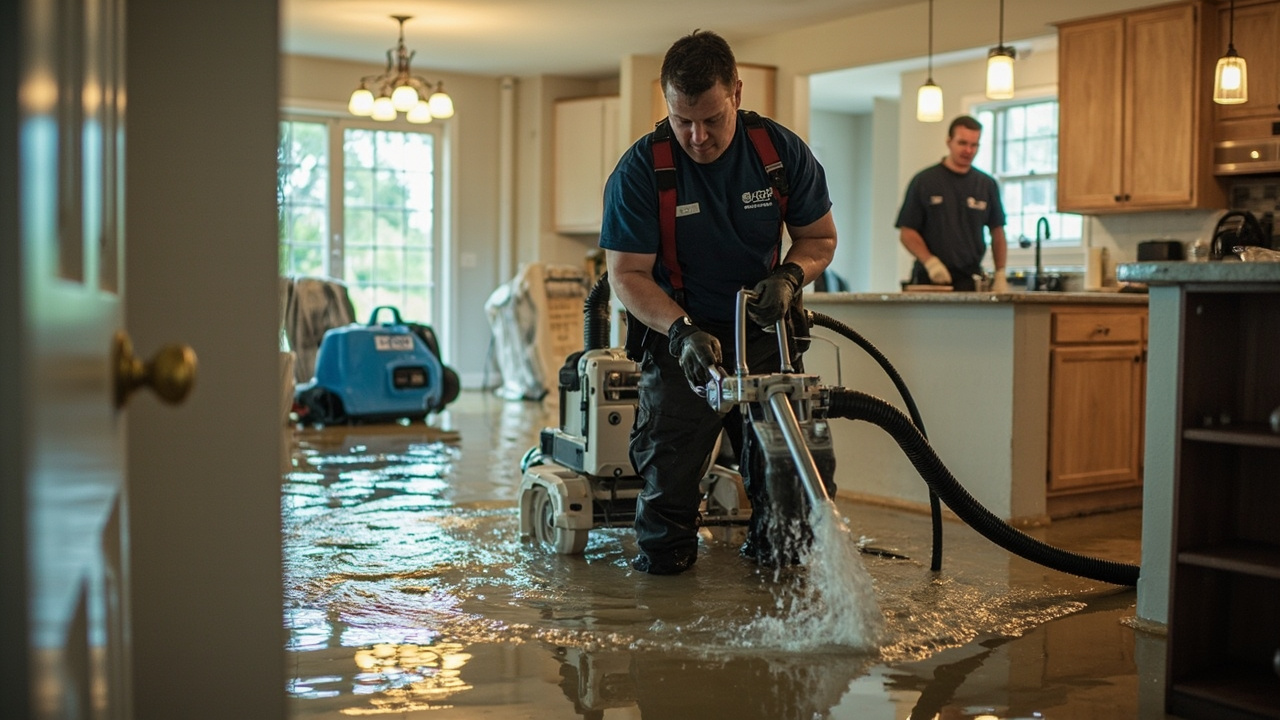

Cincinnati sits in a bowl surrounded by hills that funnel stormwater into the Mill Creek and Ohio River watersheds. Neighborhoods like Lower Price Hill, East End, and Riverside regularly experience flash flooding when rainfall exceeds two inches per hour. The city's combined sewer system overflows during heavy rain, sending backflow into basement drains. Properties near Mill Creek in Northside and Saint Bernard face high water tables that activate sump pumps multiple times per month during spring. Emergency water extraction crews must respond immediately in these areas because standing water accumulates faster than gravity drainage can remove it. Delayed response means flooded mechanical systems, contaminated living spaces, and structural undermining from saturated clay soil.
Cincinnati's historic housing stock requires specialized water damage knowledge. Victorian-era homes in Walnut Hills and Mount Auburn feature horsehair plaster walls that disintegrate when wet. Balloon-framed structures allow water to travel vertically between floors. Restoration techs who understand these construction methods prevent demolition of salvageable materials. Local building codes enforced by the Cincinnati Department of Buildings and Inspections require proper drying verification before reconstruction begins. Ace Water Damage Restoration Cincinnati maintains relationships with local adjusters, contractors, and code officials. We understand what documentation satisfies local requirements. We know which materials meet current flood-resistant construction standards for basement finishing. You get accurate guidance, not generic advice from a national call center.