Why Your Air Conditioner Drain Line is Leaking into Your Blue Ash Ceiling
Your air conditioner works hard during Cincinnati summers. When the condensate drain line clogs water backs up and leaks through your ceiling. This creates a hidden water damage threat that grows worse by the day. The humid Ohio River Valley climate makes this problem especially common in Blue Ash homes. Ohio Building Code.
Most homeowners discover this issue when they see water spots or feel soft drywall. By then the damage often extends beyond what you can see. The cooling season in Cincinnati runs from May through September. During these months your AC removes gallons of moisture from the air daily. That water needs somewhere to go. Water Damage Restoration Blue Ash.
When the drain line gets blocked by algae dust or debris water overflows into your ceiling cavity. This creates the perfect environment for mold growth. In Blue Ash’s older neighborhoods like Summit Park and near the Blue Ash Recreation Center many homes have HVAC systems in attics or upper floors. A leak here means water travels through insulation before dripping onto your ceiling below.
The problem becomes urgent when you consider Cincinnati’s building codes. Hamilton County requires proper drainage for all HVAC equipment. When condensate lines fail you risk violating these codes and creating health hazards in your home.
Signs Your AC Drain Line is Leaking and Causing Damage
Water damage from AC leaks develops gradually. You might notice a musty smell before seeing any visual signs. This odor comes from microbial growth in the damp ceiling cavity. As water saturates insulation your ceiling may start to sag or bow downward.. Read more about Why Your Furnace Humidifier Might Be Leaking Into Your Sycamore Township Ceiling.
Look for these warning signs in your Blue Ash home:
- Brown or yellow water stains on ceiling drywall
- Damp spots on walls near vents
- Musty odors when your AC runs
- Warm air coming from vents instead of cool air
- Water pooling near your furnace or air handler
- Ceiling texture bubbling or peeling
The float switch in your air handler should shut off the system when water backs up. However many older Blue Ash homes have outdated or disconnected safety switches. This means your AC keeps running while water accumulates.
Professional restoration technicians use moisture meters to detect hidden water. They check multiple depths in drywall and insulation. A reading above 15-17% moisture content indicates active water damage requiring immediate attention.. Read more about The Hidden Dangers of Leaving a Small Bathroom Leak for Too Long.
The Real Cost of Neglect: Structural and Health Risks
Water damage escalates quickly in Cincinnati’s humid climate. Within 24-48 hours mold spores begin to germinate in damp materials. The IICRC S500 standard for water damage restoration emphasizes this critical timeframe. After 72 hours Category 1 clean water becomes Category 2 gray water significantly increasing remediation costs. IICRC S500 standard.
Structural damage progresses through stages:
- Initial saturation of ceiling drywall and insulation
- Compression and breakdown of insulation R-value
- Softening and delamination of drywall paper facing
- Potential ceiling collapse from weight of saturated materials
The health risks compound the problem. Standing water in your ceiling cavity creates breeding grounds for:
- Stachybotrys chartarum (black mold)
- Legionella bacteria in stagnant condensate
- Dust mites and other allergens
- Structural pests attracted to moisture
Blue Ash homes near Summit Park often have finished basements. Water traveling down from upper floor leaks can affect multiple levels of your home. The interconnected nature of modern HVAC systems means one leak can impact your entire property. What to Do When Your Indian Hill Basement Floods Unexpectedly.
Professional Restoration vs. DIY Fixes
Many homeowners try to fix AC drain line leaks themselves. They might clear the clog with vinegar or use a wet vacuum. While these steps help temporarily they miss the bigger problem. Water already in your ceiling cavity continues causing damage.
Professional restoration follows a systematic approach based on IICRC S500 standards:
- Emergency Assessment
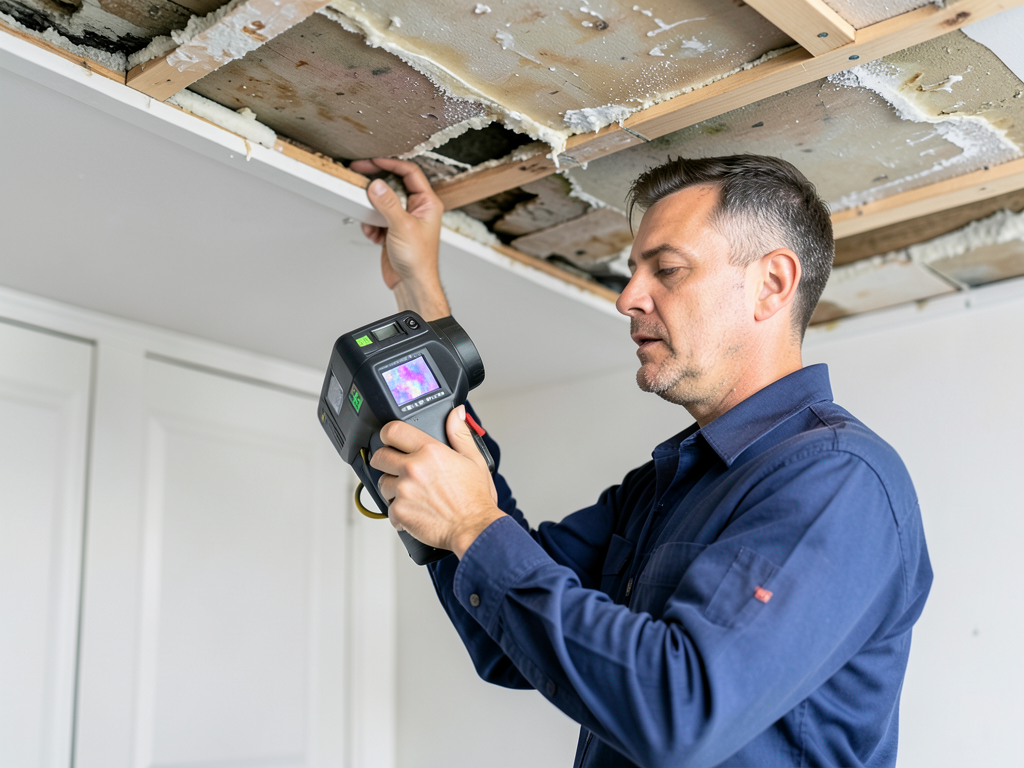
Technicians use thermal imaging cameras to locate moisture without destructive testing. They check for active leaks and assess damage extent.
- Water Extraction
Industrial-grade extractors remove standing water from ceiling cavities. This prevents further absorption into structural materials.
- Demolition and Removal
Damaged drywall insulation and vapor barriers get removed to prevent mold spread. This follows EPA guidelines for mold remediation. EPA guidelines for mold remediation.
- Structural Drying
High-volume air movers and commercial dehumidifiers dry remaining materials. Technicians monitor moisture levels daily until reaching safe thresholds.
- Sanitization and Prevention
EPA-registered antimicrobial treatments prevent future microbial growth. Secondary drain pans and upgraded float switches get installed.
The equipment used differs significantly from consumer products. Professional air movers move 2000-3000 cubic feet per minute. Commercial dehumidifiers remove 20-30 gallons of water daily. These specifications matter when drying saturated ceiling assemblies.
DIY approaches often fail because homeowners cannot access all affected areas. Water travels along ceiling joists and through insulation. Without proper drying equipment moisture remains trapped leading to recurring problems.
Preventing Future Overflow and Water Damage
Prevention saves money and protects your home. Cincinnati’s climate demands specific maintenance strategies. The Ohio Building Code requires secondary drain pans for attic HVAC installations. Many Blue Ash homes built before 2000 lack these critical safety features.
Effective prevention includes:
- Annual HVAC maintenance before cooling season
- Installation of secondary drain pans with overflow sensors
- Bi-annual cleaning of condensate lines with algaecide tablets
- Upgraded float switches that cut power to the entire system
- Regular inspection of attic insulation for moisture
The Blue Ash Recreation Center area experiences higher humidity levels due to nearby green spaces and water features. Homes in this area benefit from more frequent maintenance schedules. Local HVAC contractors recommend quarterly inspections during peak cooling months.
Smart home technology offers additional protection. Water sensors placed in secondary drain pans send alerts to your phone when moisture is detected. Some systems automatically shut off your AC when problems arise.
Insurance coverage varies by policy. Most Ohio homeowners insurance covers sudden AC leaks but excludes damage from neglected maintenance. Document all maintenance and repairs to support insurance claims if problems occur.
The cost of prevention typically runs $200-400 annually. Compare this to restoration costs of $3000-8000 for ceiling water damage. Prevention also protects your home’s value and prevents health issues from mold exposure.
Local Emergency Response in Blue Ash
When water damage strikes local response matters. Blue Ash’s suburban layout means traffic can delay emergency services. Having a local restoration company familiar with the area ensures faster response times.
Professional restoration teams arrive equipped to handle Cincinnati’s specific challenges:
- Knowledge of local building materials and construction methods
- Understanding of Hamilton County permit requirements
- Experience with Blue Ash’s water table and soil conditions
- Familiarity with local insurance company procedures
The restoration process typically takes 3-5 days for ceiling damage. This includes drying time which cannot be rushed without risking secondary damage. During this period technicians monitor moisture levels multiple times daily.
Documentation proves crucial for insurance claims. Professional restoration companies provide detailed reports with moisture mapping damage photographs and repair specifications. This documentation speeds claim processing and ensures proper compensation.
Blue Ash’s proximity to major highways means restoration teams can reach most homes within 30-45 minutes. This quick response minimizes damage spread and reduces overall restoration costs.
Don’t wait for visible damage to appear. If you suspect your AC drain line is leaking call for professional assessment immediately. The cost of early detection always beats the expense of full restoration.
Call (513) 717-2522 today to schedule your inspection. Our Blue Ash-based team understands local building codes and Cincinnati’s unique climate challenges. We provide 24/7 emergency response to stop water damage before it destroys your home.
Pick up the phone and call (513) 717-2522 before the next storm hits. Water damage waits for no one but professional restoration can save your ceiling and protect your family’s health.
You may also find this helpful. Why traditional bleach is the wrong way to handle mold on your Madeira drywall.
{
“@context”: “https://schema.org”,
“@type”: “BlogPosting”,
“headline”: “Why Your Air Conditioner Drain Line is Leaking into Your Blue Ash Ceiling”,
“description”: “AC drain line leaks cause ceiling water damage in Blue Ash homes. Learn warning signs, restoration costs, and prevention methods for Cincinnati’s humid climate.”,
“wordCount”: 1282,
“datePublished”: “2026-05-10T10:34:00.000Z”,
“dateModified”: “2026-05-10T10:34:00.000Z”,
“inLanguage”: “en-US”,
“mainEntityOfPage”: {
“@type”: “WebPage”,
“@id”: “https://acewaterdamagerestorationcincinnati.com”
},
“publisher”: {
“@type”: “LocalBusiness”,
“name”: “Ace Water Damage Restoration Cincinnati”,
“url”: “https://acewaterdamagerestorationcincinnati.com”
},
“author”: {
“@type”: “Organization”,
“name”: “Ace Water Damage Restoration Cincinnati”,
“url”: “https://acewaterdamagerestorationcincinnati.com”
},
“image”: {
“@type”: “ImageObject”,
“url”: “https://acewaterdamagerestorationcincinnati.com/wp-content/uploads/2026/03/why-your-air-conditioner-drain-line-is-leaking-int-1.png”
}
}
{
“@context”: “https://schema.org”,
“@type”: “LocalBusiness”,
“name”: “Ace Water Damage Restoration Cincinnati”,
“url”: “https://acewaterdamagerestorationcincinnati.com”,
“address”: {
“@type”: “PostalAddress”,
“addressLocality”: “Cincinnati”
},
“areaServed”: {
“@type”: “City”,
“name”: “Cincinnati”
}
}
{
“@context”: “https://schema.org”,
“@type”: “HowTo”,
“name”: “Professional Water Damage Restoration Process”,
“step”: [
{
“@type”: “HowToStep”,
“position”: 1,
“name”: “Emergency Assessment”,
“text”: “Technicians use thermal imaging cameras to locate moisture without destructive testing. They check for active leaks and assess damage extent.”
},
{
“@type”: “HowToStep”,
“position”: 2,
“name”: “Water Extraction”,
“text”: “Industrial-grade extractors remove standing water from ceiling cavities. This prevents further absorption into structural materials.”
},
{
“@type”: “HowToStep”,
“position”: 3,
“name”: “Demolition and Removal”,
“text”: “Damaged drywall insulation and vapor barriers get removed to prevent mold spread. This follows EPA guidelines for mold remediation. EPA guidelines for mold remediation.”
},
{
“@type”: “HowToStep”,
“position”: 4,
“name”: “Structural Drying”,
“text”: “High-volume air movers and commercial dehumidifiers dry remaining materials. Technicians monitor moisture levels daily until reaching safe thresholds.”
},
{
“@type”: “HowToStep”,
“position”: 5,
“name”: “Sanitization and Prevention”,
“text”: “EPA-registered antimicrobial treatments prevent future microbial growth. Secondary drain pans and upgraded float switches get installed.”
}
],
“image”: “https://acewaterdamagerestorationcincinnati.com/wp-content/uploads/2026/03/why-your-air-conditioner-drain-line-is-leaking-int-1.png”
}
{
“@context”: “https://schema.org”,
“@type”: “BreadcrumbList”,
“itemListElement”: [
{
“@type”: “ListItem”,
“position”: 1,
“name”: “Home”,
“item”: “https://acewaterdamagerestorationcincinnati.com”
},
{
“@type”: “ListItem”,
“position”: 2,
“name”: “Blog”,
“item”: “https://acewaterdamagerestorationcincinnati.com/blog”
},
{
“@type”: “ListItem”,
“position”: 3,
“name”: “Why Your Air Conditioner Drain Line is Leaking into Your Blue Ash Ceiling”
}
]
}
{
“@context”: “https://schema.org”,
“@type”: “Service”,
“serviceType”: “Water Damage Restoration”,
“provider”: {
“@type”: “LocalBusiness”,
“name”: “Ace Water Damage Restoration Cincinnati”,
“url”: “https://acewaterdamagerestorationcincinnati.com”
},
“areaServed”: {
“@type”: “City”,
“name”: “Cincinnati”
},
“description”: “AC drain line leaks cause ceiling water damage in Blue Ash homes. Learn warning signs, restoration costs, and prevention methods for Cincinnati’s humid climate.”
}