Simple Yard Drainage Fixes to Protect Your Batavia Foundation
Water pooling near your Batavia home’s foundation isn’t just a nuisance—it’s a warning sign that can lead to thousands of dollars in structural damage. The heavy clay soils of Clermont County expand when wet and contract when dry, creating pressure that pushes against basement walls and cracks concrete foundations. This guide shows you how to stop water before it becomes a restoration emergency. What to Do When Your Indian Hill Basement Floods Unexpectedly.
Understanding Batavia’s Unique Drainage Challenges
Batavia sits on Illinoian till, a dense clay soil that holds water like a sponge. When heavy spring rains hit, this soil expands by up to 10 percent, creating hydrostatic pressure against foundation walls. The Little Miami River watershed means Batavia homes face both surface water runoff and rising groundwater tables during storm events. Water Damage Restoration Blue Ash.
Older homes in Batavia’s historic district often lack proper grading because they predate modern drainage codes. Newer subdivisions in the Eastgate area face different challenges—compacted fill soil that sheds water toward foundations instead of away from them.. Read more about Stopping Foundation Seepage in College Hill During Heavy Rains.
Common Signs Your Batavia Foundation Has Drainage Issues
- Efflorescence: White powdery residue on basement walls indicates water is seeping through masonry
- Foundation cracks: Horizontal cracks suggest lateral pressure from saturated soil
- Musty odors: Mold and mildew thrive in damp basements, creating health hazards
- Water stains: Dark rings on walls show previous flooding events
- Sump pump running constantly: Indicates groundwater is overwhelming your drainage system
Proven Yard Drainage Solutions for Batavia Homes
French Drains: The Foundation’s First Line of Defense
A properly installed French drain redirects water away from your foundation before it can cause damage. The system consists of a perforated pipe surrounded by gravel, buried in a trench sloped away from your home.
For Batavia’s clay soil, the trench should be at least 18 inches deep and extend 10 feet from the foundation. The pipe needs a minimum 1 percent slope—that’s 1 foot of drop for every 100 feet of run.

A cross-section diagram showing French drain installation with proper slope, gravel backfill, and filter fabric to prevent soil clogging.
Grading and Slope Correction
Proper grading directs water away from your foundation. The ground should slope at least 6 inches down within the first 10 feet from your home.
Many Batavia homes settle over time, creating negative grades that funnel water toward foundations. This is especially common in the older village area where homes were built on undisturbed soil that has compacted over decades.
Downspout Extensions and Discharge Lines
Your roof sheds thousands of gallons during a typical Ohio thunderstorm. Standard downspouts often discharge water right next to foundations, creating concentrated pressure points. Ohio Building Code Chapter 11 on surface drainage.
Extend downspouts at least 6 feet from your foundation using solid drain pipe. For Batavia’s freeze-thaw cycles, use Schedule 40 PVC pipe rather than flexible tubing, which can collapse under soil weight.
Catch Basins and Surface Drains
Low spots in your yard collect water during heavy rains. Catch basins with grated tops collect this surface water and channel it to appropriate discharge points.. Read more about Why Your Sump Pump Discharge Line is Clogged in Dent.
Position catch basins at the lowest points of your yard, typically where you see standing water after storms. Connect them to solid drain pipe that discharges at least 20 feet from your foundation.
Comparing Drainage Solutions: Costs and Effectiveness
| Solution | Initial Cost Range | Effectiveness Rating | Best For |
|---|---|---|---|
| French Drain | $1,500 – $4,000 | 9/10 | Foundation perimeter protection |
| Grading Correction | $500 – $2,000 | 7/10 | Surface water management |
| Downspout Extensions | $150 – $500 | 8/10 | Roof runoff control |
| Catch Basins | $300 – $800 each | 6/10 | Low spot collection |
DIY vs. Professional Installation: What Batavia Homeowners Should Know
Simple grading corrections and downspout extensions make excellent DIY projects. However, French drains and catch basin systems require understanding soil conditions, proper slope calculations, and local building codes.
Clermont County requires permits for drainage modifications that affect neighboring properties. French drains deeper than 24 inches need inspection to ensure they don’t interfere with underground utilities or create new drainage problems for adjacent homes.
The Hidden Costs of Poor Drainage in Batavia
Ignoring drainage problems leads to expensive restoration work. Water-damaged foundations can cost $10,000 to $30,000 to repair. Mold remediation adds another $2,000 to $6,000 if moisture creates the right conditions for growth. EPA flooding and water damage resources.
Batavia’s freeze-thaw cycles worsen foundation damage. Water trapped in cracks expands when frozen, widening those cracks each winter. This cycle continues until structural failure occurs. Reliable Sump Pump Failure Repair and Cleanup in Anderson Township.
Maintenance Tips for Long-Term Protection
Even the best drainage system needs maintenance. Clean catch basin grates monthly during fall when leaves accumulate. Check French drain outlets seasonally to ensure they’re not clogged with sediment.
Inspect your foundation after heavy rains. Look for new cracks, efflorescence, or water stains. Early detection prevents minor issues from becoming major restoration projects.
When to Call a Professional
Call for professional help if you notice foundation cracks wider than 1/8 inch, persistent basement moisture, or if your DIY drainage fixes aren’t solving the problem. These signs indicate hydrostatic pressure has already compromised your foundation’s integrity.
Professional drainage specialists use moisture meters to detect hidden water in walls and thermal imaging to identify temperature differences that indicate moisture intrusion. These diagnostic tools reveal problems that aren’t visible to the naked eye.
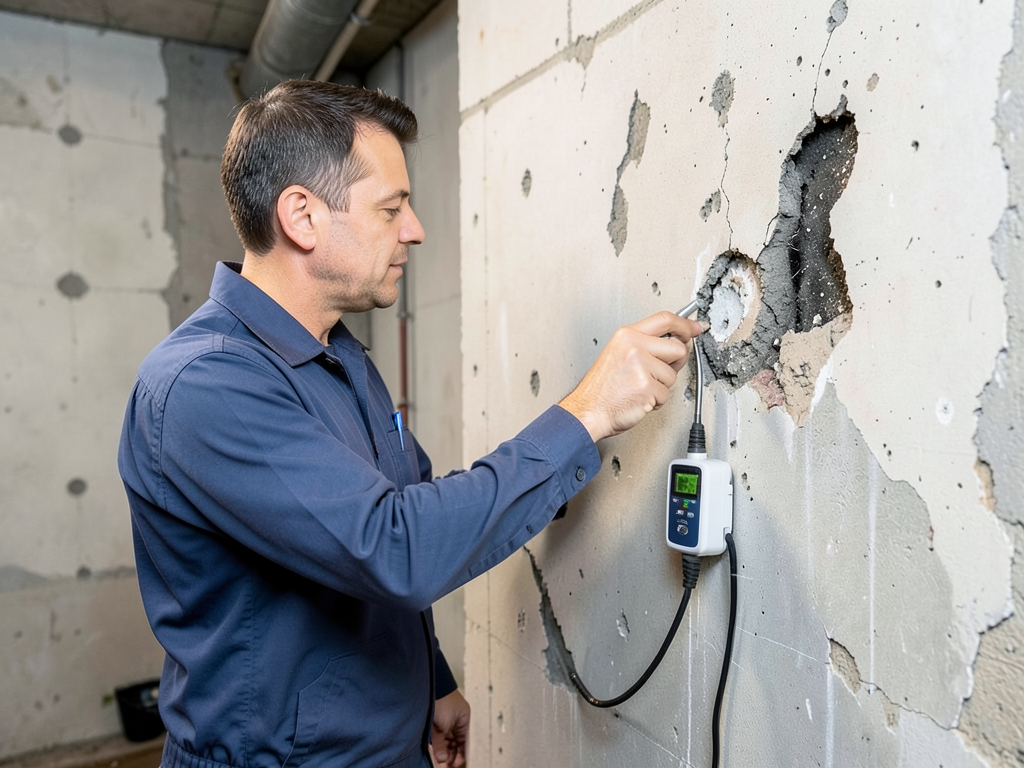
A technician using a moisture meter on a basement wall, showing the diagnostic process for detecting hidden water damage.
Local Building Code Requirements
Clermont County Building Department requires drainage modifications to comply with Ohio Building Code Chapter 11, which mandates proper surface water management away from structures. Permits are required for any work that alters existing grades or installs subsurface drainage systems.
Discharge lines must not create new problems for neighboring properties. The code requires that water be directed to appropriate drainage courses or storm sewers, not onto sidewalks, streets, or adjacent lots.
Protecting Your Investment: The Bottom Line
Simple yard drainage fixes cost far less than foundation restoration. A $2,000 French drain installation prevents $20,000 in potential foundation repairs. The math is clear: prevention is always cheaper than restoration.
Batavia’s unique soil conditions and weather patterns make proper drainage essential for every homeowner. Whether you tackle projects yourself or hire professionals, addressing water issues now protects your home’s value and structural integrity for years to come.
Frequently Asked Questions
How do I know if my Batavia home has drainage problems?
Look for water stains on basement walls, musty odors, foundation cracks, or standing water near your foundation after rain. These are clear signs that water is not draining properly away from your home.
Can I install a French drain myself?
DIY French drains are possible for simple installations, but professional installation ensures proper slope, depth, and compliance with local codes. Clermont County requires permits for drainage work that affects neighboring properties.
How much does professional yard drainage cost in Batavia?
Professional drainage solutions range from $500 for simple grading corrections to $4,000 for comprehensive French drain systems. The exact cost depends on your property’s size, soil conditions, and the complexity of your drainage issues.
Will improving my yard drainage increase my home’s value?
Yes. Proper drainage protects your foundation from costly damage and prevents moisture problems that can reduce your home’s value. Buyers view good drainage as a sign of a well-maintained property.
How long do drainage systems last in Batavia’s climate?
Quality drainage systems typically last 15-20 years with proper maintenance. Batavia’s freeze-thaw cycles and clay soil can reduce lifespan, so regular inspection and cleaning are essential for longevity.
Before and after photos showing a Batavia home’s yard transformation from water-damaged foundation to properly graded and drained landscape.
Take Action Before the Next Storm Hits
Don’t wait for the next heavy rain to discover foundation problems. Simple drainage fixes now can prevent expensive restoration work later. Whether you need a professional assessment or want to tackle DIY projects, addressing water issues today protects your Batavia home’s future.
Call (513) 717-2522 today to schedule your inspection. Our Batavia drainage specialists understand Clermont County’s unique soil challenges and can recommend solutions that actually work in our local conditions.
{
“@context”: “https://schema.org”,
“@type”: “BlogPosting”,
“headline”: “Simple Yard Drainage Fixes to Protect Your Batavia Foundation”,
“description”: “Protect your Batavia home from foundation damage with proven yard drainage solutions. Learn about French drains, grading, and Clermont County soil challenges.”,
“wordCount”: 1363,
“datePublished”: “2026-03-29T06:35:00.000Z”,
“dateModified”: “2026-03-29T06:35:00.000Z”,
“inLanguage”: “en-US”,
“mainEntityOfPage”: {
“@type”: “WebPage”,
“@id”: “https://acewaterdamagerestorationcincinnati.com”
},
“publisher”: {
“@type”: “LocalBusiness”,
“name”: “Ace Water Damage Restoration Cincinnati”,
“url”: “https://acewaterdamagerestorationcincinnati.com”
},
“author”: {
“@type”: “Organization”,
“name”: “Ace Water Damage Restoration Cincinnati”,
“url”: “https://acewaterdamagerestorationcincinnati.com”
},
“image”: {
“@type”: “ImageObject”,
“url”: “https://acewaterdamagerestorationcincinnati.com/wp-content/uploads/2026/03/simple-yard-drainage-fixes-to-protect-your-batavia-1.png”
}
}
{
“@context”: “https://schema.org”,
“@type”: “LocalBusiness”,
“name”: “Ace Water Damage Restoration Cincinnati”,
“url”: “https://acewaterdamagerestorationcincinnati.com”,
“address”: {
“@type”: “PostalAddress”,
“addressLocality”: “Cincinnati”
},
“areaServed”: {
“@type”: “City”,
“name”: “Cincinnati”
}
}
{
“@context”: “https://schema.org”,
“@type”: “FAQPage”,
“mainEntity”: [
{
“@type”: “Question”,
“name”: “How do I know if my Batavia home has drainage problems?”,
“acceptedAnswer”: {
“@type”: “Answer”,
“text”: “Look for water stains on basement walls, musty odors, foundation cracks, or standing water near your foundation after rain. These are clear signs that water is not draining properly away from your home.”
}
},
{
“@type”: “Question”,
“name”: “Can I install a French drain myself?”,
“acceptedAnswer”: {
“@type”: “Answer”,
“text”: “DIY French drains are possible for simple installations, but professional installation ensures proper slope, depth, and compliance with local codes. Clermont County requires permits for drainage work that affects neighboring properties.”
}
},
{
“@type”: “Question”,
“name”: “How much does professional yard drainage cost in Batavia?”,
“acceptedAnswer”: {
“@type”: “Answer”,
“text”: “Professional drainage solutions range from $500 for simple grading corrections to $4,000 for comprehensive French drain systems. The exact cost depends on your property’s size, soil conditions, and the complexity of your drainage issues.”
}
},
{
“@type”: “Question”,
“name”: “Will improving my yard drainage increase my home’s value?”,
“acceptedAnswer”: {
“@type”: “Answer”,
“text”: “Yes. Proper drainage protects your foundation from costly damage and prevents moisture problems that can reduce your home’s value. Buyers view good drainage as a sign of a well-maintained property.”
}
},
{
“@type”: “Question”,
“name”: “How long do drainage systems last in Batavia’s climate?”,
“acceptedAnswer”: {
“@type”: “Answer”,
“text”: “Quality drainage systems typically last 15-20 years with proper maintenance. Batavia’s freeze-thaw cycles and clay soil can reduce lifespan, so regular inspection and cleaning are essential for longevity.”
}
}
]
}
{
“@context”: “https://schema.org”,
“@type”: “BreadcrumbList”,
“itemListElement”: [
{
“@type”: “ListItem”,
“position”: 1,
“name”: “Home”,
“item”: “https://acewaterdamagerestorationcincinnati.com”
},
{
“@type”: “ListItem”,
“position”: 2,
“name”: “Blog”,
“item”: “https://acewaterdamagerestorationcincinnati.com/blog”
},
{
“@type”: “ListItem”,
“position”: 3,
“name”: “Simple Yard Drainage Fixes to Protect Your Batavia Foundation”
}
]
}
{
“@context”: “https://schema.org”,
“@type”: “Service”,
“serviceType”: “Water Damage Restoration”,
“provider”: {
“@type”: “LocalBusiness”,
“name”: “Ace Water Damage Restoration Cincinnati”,
“url”: “https://acewaterdamagerestorationcincinnati.com”
},
“areaServed”: {
“@type”: “City”,
“name”: “Cincinnati”
},
“description”: “Protect your Batavia home from foundation damage with proven yard drainage solutions. Learn about French drains, grading, and Clermont County soil challenges.”
}