
Signs Your Mt Healthy Chimney is Leaking Water Into Your Living Room
Water dripping down your chimney or pooling near your fireplace could mean serious damage is already happening inside your walls. In Mt Healthy’s freeze-thaw climate, even small cracks in chimney masonry can funnel gallons of water into your living space. This guide shows you how to spot the warning signs before they turn into costly repairs. EPA Mold Information.
7 Warning Signs Your Chimney Is Leaking (Cincinnati Homeowner’s Guide)
Chimney leaks often start small but can cause major structural damage if ignored. Here are the most common symptoms homeowners notice: Water Damage Restoration Blue Ash.
- Dripping sounds during or after rain – water hitting metal damper or pooling in firebox
- Musty odors near fireplace – indicates moisture and potential mold growth
- Water stains on ceiling or walls near chimney – brown or yellow discoloration
- Efflorescence – white powdery deposits on exterior brick
- Spalling bricks – face of brick flaking or popping off
- Rusted damper or firebox – metal components corroding from moisture
- Cracked chimney crown – visible gaps or deterioration at top
Visible Symptoms Inside Your Home
Interior signs of chimney leaks often appear gradually. Water follows the path of least resistance down the chimney structure, damaging materials along the way.. Read more about Managing Water Damage in Shared Walls for Over-the-Rhine Row Houses.
Fireplace water damage shows as damp ash, rusted grates, or water pooling in the firebox. You might notice ceiling stains directly above the fireplace or along walls adjacent to the chimney. These stains often start small but spread as the leak worsens.
Pay attention to musty odors when the fireplace is not in use. This smell indicates moisture trapped in the chimney structure, creating conditions for mold growth. If you notice peeling paint or wallpaper near the chimney, water is likely behind the wall surface.
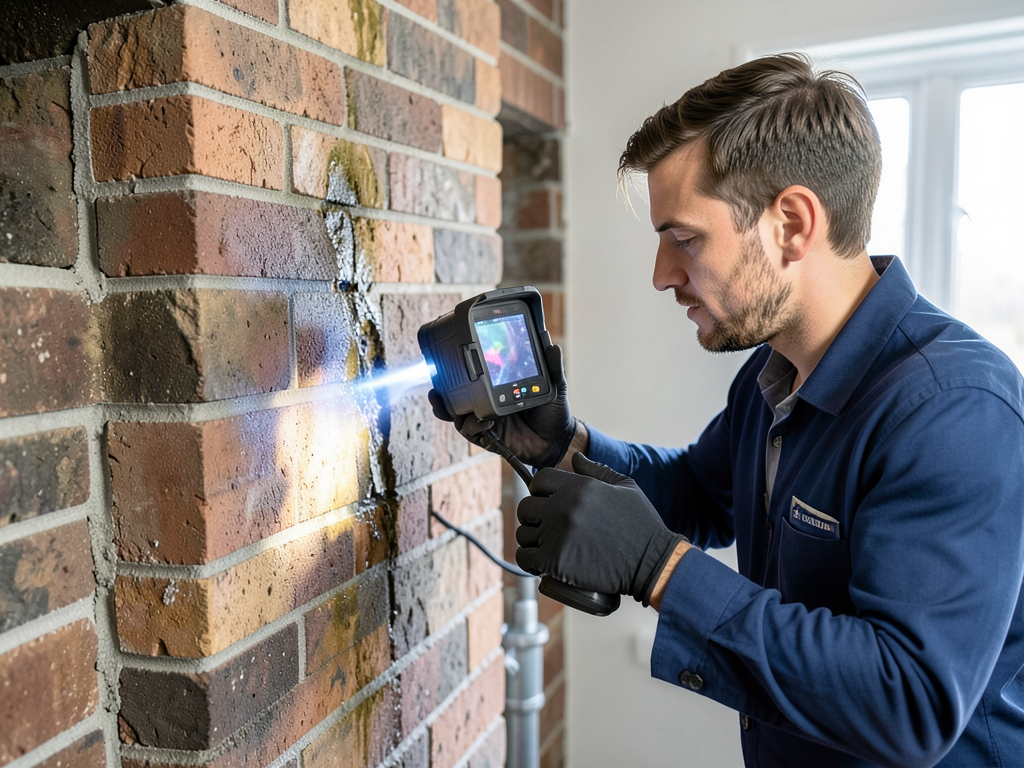
Thermal imaging can reveal hidden moisture patterns that aren’t visible to the naked eye. A professional restoration technician uses this tool to detect water intrusion before it becomes obvious.
External Indicators of Chimney Structure Failure
Exterior chimney problems often precede interior damage. Cincinnati’s freeze-thaw cycles cause masonry to expand and contract, creating cracks that water exploits.
Efflorescence appears as white, chalky deposits on brick surfaces. This occurs when water dissolves salts in the masonry and brings them to the surface as it evaporates. While not structurally harmful itself, efflorescence indicates ongoing moisture problems.
Spalling happens when water penetrates brick, then freezes and expands, causing the brick face to flake off. You’ll see pieces of brick or mortar on the ground near your chimney. This deterioration accelerates as more water enters through the damaged areas.
Check your chimney crown for cracks or gaps. This concrete slab at the top of your chimney protects the entire structure. Even hairline cracks allow water infiltration. Damaged flashing where the chimney meets the roof is another common failure point. Look for bent, rusted, or missing flashing materials.
Crumbling mortar joints between bricks indicate water damage. As mortar deteriorates, it creates pathways for water to enter the chimney structure. This damage often starts at the top and works downward.
Why Cincinnati’s Climate Causes Chimney Leaks
Cincinnati’s weather creates perfect conditions for chimney deterioration. The region experiences 40-50 freeze-thaw cycles annually, each one stressing masonry materials.
During winter, water trapped in small cracks freezes and expands by about 9% in volume. This expansion forces cracks wider. When temperatures rise above freezing, the ice melts and more water enters the enlarged crack. This cycle repeats throughout the winter months.
Mt Healthy’s location in Hamilton County means your chimney faces additional challenges. The area’s clay-heavy soils retain moisture, keeping chimney foundations damp for extended periods. This constant moisture exposure accelerates mortar deterioration.
Heavy spring rains common in Cincinnati (average 3-4 inches monthly from March through May) test chimney waterproofing systems. If your chimney flashing or crown sealant has any weaknesses, water finds them during these intense rainfall events.
The Ohio Building Code requires specific waterproofing standards for masonry chimneys, but many older homes in Mt Healthy were built before these requirements existed. If your home was built before 1980, it likely lacks modern moisture protection.
The Hidden Dangers of Ignoring a Leaky Chimney (Mold & Rot)
Chimney leaks cause damage far beyond the fireplace area. Water traveling down the chimney structure can affect your entire home’s integrity.
Attic mold growth often starts near the chimney chase. As water penetrates through the chimney structure, it creates dark, moist conditions perfect for mold spores to multiply. Stachybotrys chartarum (black mold) can establish colonies within 24-48 hours of water exposure.
Structural wood rot affects floor joists and roof rafters near the chimney. Water weakens wood fibers, causing them to lose strength. Over time, this can lead to sagging floors or roof sections near the chimney.
Insulation damage occurs when water saturates fiberglass or cellulose insulation in walls and attics. Wet insulation loses its R-value, reducing your home’s energy efficiency. It also becomes a breeding ground for mold and bacteria.
Foundation issues can develop if water pooling around the chimney base seeps into the ground near your foundation. This is especially problematic in Mt Healthy’s clay soils, which expand when wet and contract when dry, creating pressure on foundation walls.
Electrical hazards emerge when water contacts wiring or electrical boxes near the chimney. Water conducts electricity and can cause short circuits or fire risks.
Health risks increase with prolonged exposure to mold from chimney leaks. Symptoms include respiratory issues, allergic reactions, and in severe cases, neurological problems from certain mold species.
Next Steps: Professional Inspection vs. DIY Check
Homeowners can perform basic chimney inspections, but professional assessment catches problems early.
DIY inspection steps:
- Check for visible water stains or damage around fireplace and ceiling
- Look for efflorescence or spalling on exterior chimney
- Inspect mortar joints for crumbling or gaps
- Check flashing where chimney meets roof for damage
- Look for cracks in chimney crown from ground level
Professional inspection includes:
- Thermal imaging to detect hidden moisture patterns
- Moisture meter readings at multiple depths
- Close inspection of flashing and crown integrity
- Assessment of structural stability
- Identification of water entry points using specialized equipment
Professional tools include infrared cameras that show temperature differences indicating moisture, borescopes for viewing inside chimney walls, and moisture meters that measure water content in materials. These tools reveal problems that homeowners cannot see.
When to call a professional: If you notice any warning signs, see active water intrusion, or your chimney is over 20 years old. Also call if you’ve had recent severe weather or if your home is in a historic district with older masonry.
Cost considerations: A basic chimney inspection typically costs $150-300. Repairs range from $500 for minor flashing replacement to $5,000+ for major structural repairs. Early detection usually means lower repair costs.
Insurance coverage: Standard homeowners insurance typically covers sudden, accidental water damage but may exclude long-term neglect or maintenance issues. Document damage with photos and keep repair estimates for insurance claims.
Frequently Asked Questions
How can I tell if my chimney is leaking or if it’s a roof leak?
Chimney leaks typically show as water directly around the fireplace or in the firebox, while roof leaks often appear as ceiling stains away from the chimney. A professional inspection can determine the exact source using moisture detection equipment.
How much does chimney leak repair cost in Cincinnati?
Repair costs vary widely based on damage extent. Minor flashing repairs start around $500, while crown replacement costs $1,500-3,000. Major structural repairs or complete rebuilding can exceed $5,000. Most Cincinnati homeowners spend $1,000-2,500 for typical chimney leak repairs.. Read more about The Real Cost of Sagging Drywall Repair in North College Hill.
Can I use my fireplace if my chimney is leaking?
No. Using a fireplace with a leaking chimney creates fire hazards and accelerates damage. Water in the firebox can cause steam explosions when heated. Additionally, moisture in the chimney can mix with creosote, creating acidic compounds that damage masonry faster.
How long does it take for mold to grow from a chimney leak?
Under optimal conditions, mold can begin growing within 24-48 hours of water exposure. The dark, moist environment inside chimney walls provides ideal conditions for rapid mold colonization. Addressing leaks quickly prevents mold establishment.
Does homeowners insurance cover chimney leak damage?
Insurance coverage depends on the cause. Sudden damage from storms is typically covered, but gradual deterioration from neglect usually isn’t. Most policies exclude maintenance-related issues. Document damage thoroughly and check your specific policy terms before filing claims.
Call (513) 717-2522 today to schedule your chimney inspection. Our certified technicians use thermal imaging and moisture detection to find hidden leaks before they cause major damage. Don’t wait until water is dripping into your living room.
Pick up the phone and call (513) 717-2522 before the next storm hits. Mt Healthy’s clay soils and freeze-thaw cycles make chimney leaks a serious threat to your home’s structure. Our 24/7 emergency response team is ready to protect your property. For more information, visit International Residential Code.
{
“@context”: “https://schema.org”,
“@type”: “BlogPosting”,
“headline”: “Signs Your Mt Healthy Chimney is Leaking Water Into Your Living Room”,
“description”: “Is water seeping into your Mt Healthy home from the chimney? Learn to spot chimney leak symptoms, understand why Cincinnati’s climate causes damage, and protect your home.”,
“wordCount”: 1484,
“datePublished”: “2026-04-08T15:10:00.000Z”,
“dateModified”: “2026-04-08T15:10:00.000Z”,
“inLanguage”: “en-US”,
“mainEntityOfPage”: {
“@type”: “WebPage”,
“@id”: “https://acewaterdamagerestorationcincinnati.com”
},
“publisher”: {
“@type”: “LocalBusiness”,
“name”: “Ace Water Damage Restoration Cincinnati”,
“url”: “https://acewaterdamagerestorationcincinnati.com”
},
“author”: {
“@type”: “Organization”,
“name”: “Ace Water Damage Restoration Cincinnati”,
“url”: “https://acewaterdamagerestorationcincinnati.com”
},
“image”: {
“@type”: “ImageObject”,
“url”: “https://acewaterdamagerestorationcincinnati.com/wp-content/uploads/2026/03/signs-your-mt-healthy-chimney-is-leaking-water-int-1.png”
}
}
{
“@context”: “https://schema.org”,
“@type”: “LocalBusiness”,
“name”: “Ace Water Damage Restoration Cincinnati”,
“url”: “https://acewaterdamagerestorationcincinnati.com”,
“address”: {
“@type”: “PostalAddress”,
“addressLocality”: “Cincinnati”
},
“areaServed”: {
“@type”: “City”,
“name”: “Cincinnati”
}
}
{
“@context”: “https://schema.org”,
“@type”: “FAQPage”,
“mainEntity”: [
{
“@type”: “Question”,
“name”: “How can I tell if my chimney is leaking or if it’s a roof leak?”,
“acceptedAnswer”: {
“@type”: “Answer”,
“text”: “Chimney leaks typically show as water directly around the fireplace or in the firebox, while roof leaks often appear as ceiling stains away from the chimney. A professional inspection can determine the exact source using moisture detection equipment.”
}
},
{
“@type”: “Question”,
“name”: “How much does chimney leak repair cost in Cincinnati?”,
“acceptedAnswer”: {
“@type”: “Answer”,
“text”: “Repair costs vary widely based on damage extent. Minor flashing repairs start around $500, while crown replacement costs $1,500-3,000. Major structural repairs or complete rebuilding can exceed $5,000. Most Cincinnati homeowners spend $1,000-2,500 for typical chimney leak repairs.”
}
},
{
“@type”: “Question”,
“name”: “Can I use my fireplace if my chimney is leaking?”,
“acceptedAnswer”: {
“@type”: “Answer”,
“text”: “No. Using a fireplace with a leaking chimney creates fire hazards and accelerates damage. Water in the firebox can cause steam explosions when heated. Additionally, moisture in the chimney can mix with creosote, creating acidic compounds that damage masonry faster.”
}
},
{
“@type”: “Question”,
“name”: “How long does it take for mold to grow from a chimney leak?”,
“acceptedAnswer”: {
“@type”: “Answer”,
“text”: “Under optimal conditions, mold can begin growing within 24-48 hours of water exposure. The dark, moist environment inside chimney walls provides ideal conditions for rapid mold colonization. Addressing leaks quickly prevents mold establishment.”
}
},
{
“@type”: “Question”,
“name”: “Does homeowners insurance cover chimney leak damage?”,
“acceptedAnswer”: {
“@type”: “Answer”,
“text”: “Insurance coverage depends on the cause. Sudden damage from storms is typically covered, but gradual deterioration from neglect usually isn’t. Most policies exclude maintenance-related issues. Document damage thoroughly and check your specific policy terms before filing claims.”
}
}
]
}
{
“@context”: “https://schema.org”,
“@type”: “BreadcrumbList”,
“itemListElement”: [
{
“@type”: “ListItem”,
“position”: 1,
“name”: “Home”,
“item”: “https://acewaterdamagerestorationcincinnati.com”
},
{
“@type”: “ListItem”,
“position”: 2,
“name”: “Blog”,
“item”: “https://acewaterdamagerestorationcincinnati.com/blog”
},
{
“@type”: “ListItem”,
“position”: 3,
“name”: “Signs Your Mt Healthy Chimney is Leaking Water Into Your Living Room”
}
]
}
{
“@context”: “https://schema.org”,
“@type”: “Service”,
“serviceType”: “Water Damage Restoration”,
“provider”: {
“@type”: “LocalBusiness”,
“name”: “Ace Water Damage Restoration Cincinnati”,
“url”: “https://acewaterdamagerestorationcincinnati.com”
},
“areaServed”: {
“@type”: “City”,
“name”: “Cincinnati”
},
“description”: “Is water seeping into your Mt Healthy home from the chimney? Learn to spot chimney leak symptoms, understand why Cincinnati’s climate causes damage, and protect your home.”
}