




Menu

Business Interruption Mitigation in Cincinnati – Industrial-Scale Response That Keeps Your Operations Running

When water damage strikes your Cincinnati facility, our rapid deployment protocols and commercial-grade extraction systems minimize business downtime through coordinated restoration that prioritizes revenue-generating areas first, reducing operational downtime by mobilizing crews within 60 minutes.

Slider Image 1
Slider Image 2
Slider Image 3
Slider Image 4
Slider Image 5
Slider Image 7
Slider Image 8
Slider Image 9
Slider Image 10
Slider Image 11

Water Damage Costs Cincinnati Businesses More Than Property Damage

Every hour your Cincinnati business sits idle costs you revenue, customer trust, and competitive position. When water damage hits a commercial facility, the clock starts immediately. The difference between a minor setback and a catastrophic loss depends on how fast you restore functionality to revenue-generating spaces.

Cincinnati's position along the Ohio River creates unique flooding vulnerabilities for businesses in the Basin, Over-the-Rhine, and lower downtown areas. Spring thaw combined with heavy rainfall overwhelms aging storm sewers, pushing water into ground-level commercial spaces. The clay-heavy soil common throughout Hamilton County compounds the problem by preventing rapid drainage, which extends standing water exposure times.

Manufacturing facilities face contamination risks to inventory and equipment. Retail operations lose foot traffic and sales momentum. Office buildings deal with network infrastructure damage and document loss. Medical facilities risk regulatory violations. Each industry faces distinct challenges, but all share one critical need: business continuity restoration that gets operations back online before customers find alternatives.

Water migrates through commercial HVAC systems, spreads across warehouse floors, and seeps into wall cavities where it damages electrical infrastructure. The longer water sits, the more secondary damage compounds. Mold growth begins within 24 to 48 hours in Cincinnati's humid climate, adding health code violations to your operational headaches. Structural materials absorb moisture, requiring extensive drying protocols that extend your closure timeline.

Mitigating commercial downtime requires coordinated extraction, strategic drying placement, and prioritized restoration sequencing. You cannot afford a generic residential approach scaled up. You need industrial capacity and commercial expertise focused on limiting business disruption through systematic restoration that targets your most critical operational areas first.

Water Damage Costs Cincinnati Businesses More Than Property Damage
How We Execute Commercial Water Damage Response in Cincinnati

How We Execute Commercial Water Damage Response in Cincinnati

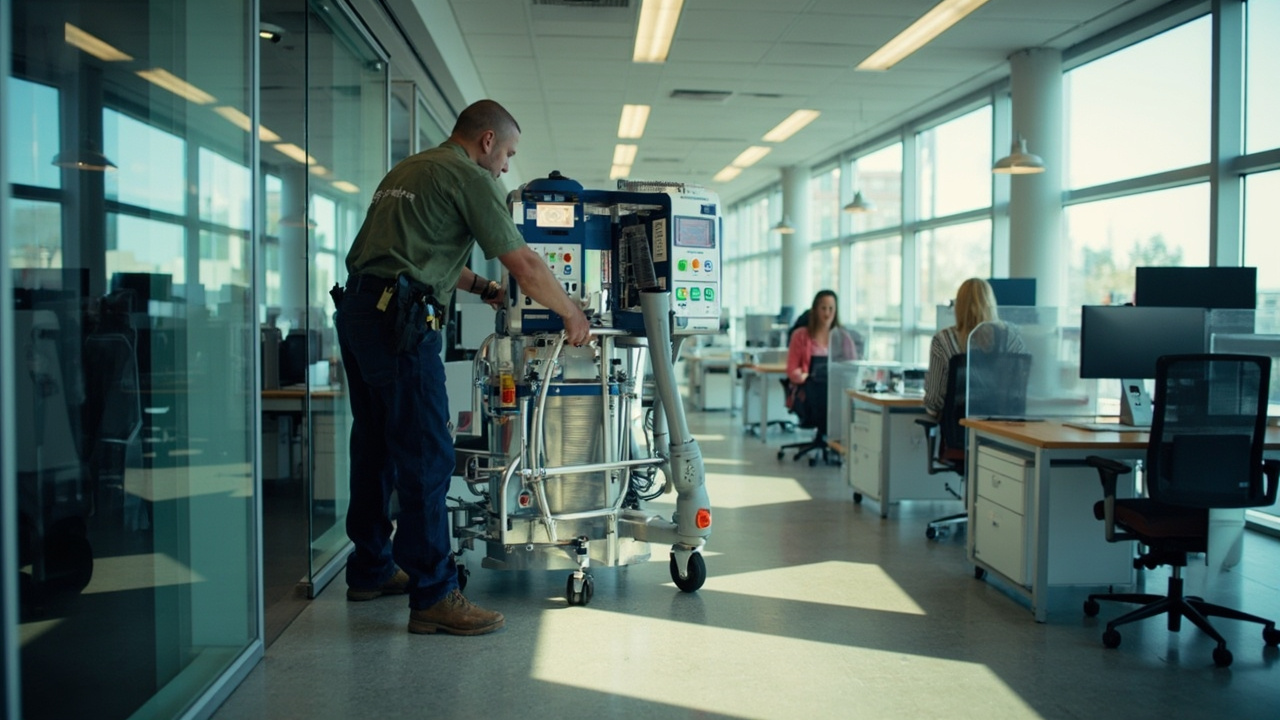
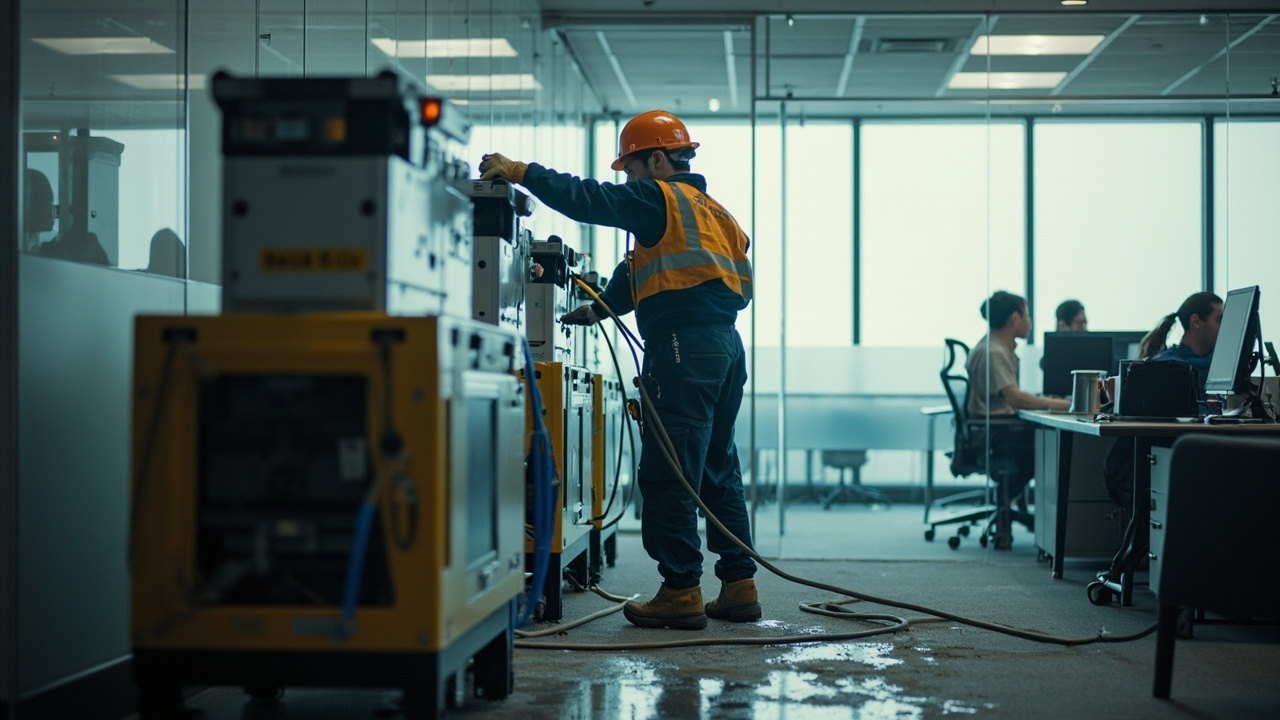
Our approach to minimizing business downtime starts before we arrive. When you call, we deploy an advance assessment team while mobilizing extraction equipment. We bring truck-mounted extractors capable of removing thousands of gallons per hour, not portable shop vacuums. We bring industrial desiccant dehumidifiers rated for warehouse volumes, not residential units that take weeks to dry a small office.

We map your facility by operational priority, not by square footage. Revenue-generating spaces get addressed first. Customer-facing areas take priority over back offices. Critical infrastructure like server rooms and electrical panels receive immediate attention and protection. We establish containment barriers using negative air pressure systems to prevent cross-contamination into operational sections, allowing you to maintain partial operations during restoration.

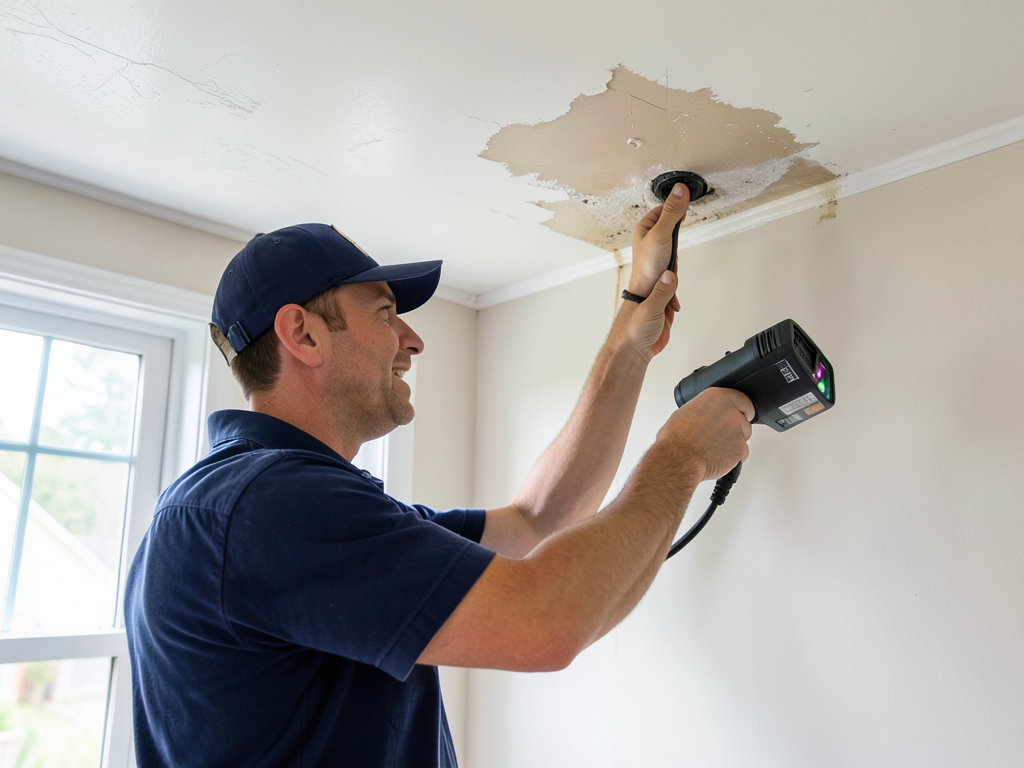
Our extraction methodology removes standing water in hours, not days. We use thermal imaging cameras to identify moisture migration through walls and under flooring materials. Moisture meters provide quantified readings at structural depth, eliminating guesswork. We document everything with time-stamped photographic evidence and moisture level logs that satisfy both insurance requirements and your internal audit needs.

Drying protocols follow IICRC S500 standards adapted for commercial velocity. We position air movers to create directional airflow that accelerates evaporation without disrupting operational areas. We monitor humidity levels continuously, adjusting equipment placement as conditions change. Our desiccant systems pull moisture from the air more aggressively than refrigerant units, cutting drying time significantly in high-volume spaces.

We coordinate with your team to schedule disruptive work during off-hours. Demolition and reconstruction happen when your business is closed. Equipment noise stays isolated from customer areas. We provide daily progress reports with measurable completion metrics so you can communicate timelines to stakeholders, employees, and customers with confidence.

What Happens During Commercial Water Damage Mitigation

Business Interruption Mitigation in Cincinnati – Industrial-Scale Response That Keeps Your Operations Running
01

Rapid Deployment and Assessment

We arrive within 60 minutes for emergency calls throughout greater Cincinnati. Our team conducts an immediate walkthrough to identify water sources, assess contamination levels, and categorize affected areas by operational importance. We establish extraction priorities based on your business needs, not just the severity of damage. You receive a verbal briefing outlining our action plan, timeline estimates, and resource deployment before equipment touches your property.
02

Extraction and Containment

Truck-mounted extractors remove standing water while portable units access confined spaces. We establish physical barriers and negative air pressure zones to isolate damaged sections from operational areas. Salvageable inventory and equipment get relocated to dry zones. We protect electrical systems, cover exposed merchandise, and secure sensitive documents. Continuous monitoring equipment tracks moisture levels in real time, providing data that guides our equipment adjustments throughout the drying cycle.
03

Restoration and Verification

After achieving target moisture levels, we begin reconstruction focused on returning your facility to full operational capacity. We replace damaged drywall, flooring, and insulation using commercial-grade materials that meet code requirements. Final verification includes moisture testing, air quality sampling, and photographic documentation proving your space meets pre-loss conditions. You receive a comprehensive report package that satisfies insurance claims, regulatory compliance, and your internal quality standards.

Why Cincinnati Businesses Choose Ace Water Damage Restoration

Commercial water damage requires different capabilities than residential work. You cannot restore a 50,000 square foot warehouse with equipment designed for a basement. You cannot navigate building code compliance, coordinate with commercial insurance adjusters, and manage liability documentation without specific commercial experience. You need a restoration partner who understands that your priority is business continuity restoration, not just drying out a building.

Ace Water Damage Restoration Cincinnati maintains industrial-capacity equipment specifically for large-scale commercial response. Our fleet includes truck-mounted extraction systems, trailer-mounted desiccant dehumidifiers, and generator packages that provide independent power when your facility's electrical infrastructure is compromised. We stock commercial air movers, thermal imaging equipment, and moisture detection tools calibrated for structural depth readings in concrete, steel, and composite materials common in Cincinnati commercial construction.

We understand Cincinnati's commercial building stock. The older brick and timber frame structures in Over-the-Rhine require different drying protocols than modern steel frame buildings in Blue Ash business parks. We know which Hamilton County inspectors oversee commercial restoration permits. We work with local commercial insurance adjusters who expect documentation standards that satisfy corporate risk management requirements.

Our crews work in shifts to maintain 24-hour coverage during active restoration. We do not leave your facility unattended with equipment running. We coordinate with your security protocols, respect access restrictions, and maintain strict chain of custody for any areas containing sensitive information or valuable inventory. You get a dedicated project manager who serves as your single point of contact, eliminating communication confusion during a crisis.

We prioritize getting you back to revenue generation. That means focusing resources on the spaces that make you money first. That means scheduling disruptive work during your closed hours. That means providing accurate completion timelines you can share with employees, customers, and stakeholders. We measure success by how fast you reopen, not by how thoroughly we document the damage.

What to Expect When You Call Ace Water Damage Restoration Cincinnati

Emergency Response Timeline

We dispatch crews within 60 minutes for emergency calls throughout Hamilton County and surrounding areas. Our assessment team arrives first to evaluate conditions while our equipment trucks mobilize. You receive an initial action plan within 30 minutes of our arrival. Extraction begins immediately upon your authorization. We maintain 24-hour operations until standing water is removed and your facility is stabilized. Our response protocols are designed around minimizing business downtime, not convenience scheduling. When water damage threatens your operations, we treat it as the business emergency it is.

Comprehensive Damage Assessment

Our commercial assessment goes beyond surface observations. We use thermal imaging to identify moisture migration through walls, ceilings, and flooring systems. We test moisture content at structural depth using penetrating moisture meters calibrated for concrete, steel, and composite materials. We document contamination levels, categorize water damage according to IICRC standards, and identify potential liability risks like asbestos or lead in older buildings. You receive a written assessment with photographic documentation, moisture mapping, and scope of work recommendations within 24 hours. This documentation package satisfies insurance requirements and provides the information you need to make informed decisions about restoration scope.

Measurable Restoration Outcomes

We define success by measurable standards, not subjective opinions. Your facility reaches completion when moisture readings match pre-loss conditions as verified by independent testing equipment. We provide documented proof through time-stamped moisture logs, thermal imaging comparisons, and final verification testing. Air quality sampling confirms the absence of mold spores or contaminants. Reconstruction work meets or exceeds Cincinnati building code requirements with permits and inspections completed. You receive a comprehensive close-out package that includes all documentation, testing results, and photographic evidence proving your facility has been restored to pre-loss conditions. This package protects you from future liability claims and satisfies regulatory compliance requirements.

Post-Restoration Support and Prevention

After restoration is complete, we provide facility-specific recommendations to prevent future water damage events. This includes identifying vulnerable areas, suggesting drainage improvements, and recommending monitoring systems that provide early warning of leaks or flooding conditions. We maintain your restoration records in our system, providing quick reference if future incidents occur. Our team remains available for follow-up inspections, additional testing, or consultation on water damage prevention strategies. We also coordinate with your insurance provider to ensure all documentation requirements are satisfied and your claim process proceeds without delays. You gain a restoration partner who understands your facility and remains available for future needs.

Frequently Asked Questions

You Have Questions,
We Have Answers

What does business interruption coverage cover? +

Business interruption coverage reimburses lost income when a covered peril forces your Cincinnati operation to shut down temporarily. It covers net profit you would have earned during the closure period, continuing operating expenses like payroll and rent, and relocation costs if you must move temporarily. The policy typically requires physical damage to trigger coverage. For Cincinnati businesses facing water damage from pipe bursts or flooding, this coverage bridges the gap between when damage occurs and when you can fully reopen. Most policies include a waiting period before benefits begin, so review your deductible structure.

What is mitigation in business? +

Mitigation in business refers to proactive measures that reduce risk exposure and minimize loss severity when disruptions occur. For Cincinnati commercial properties, this means installing backflow preventers to protect against sewer backups, upgrading HVAC systems to prevent water leaks, and maintaining emergency response plans. Effective mitigation reduces downtime, protects revenue streams, and lowers insurance premiums. It includes both physical safeguards and procedural controls. When water damage strikes, immediate mitigation steps like water extraction and drying limit secondary damage and shorten restoration timelines. Insurance carriers favor businesses that demonstrate risk mitigation commitment through documented maintenance and emergency protocols.

What actions can be taken to reduce or mitigate business risks? +

Reducing business risks requires layered controls. Implement preventive maintenance schedules for plumbing and HVAC systems. Install water detection sensors in critical areas like server rooms and storage spaces. Develop documented emergency response procedures and train staff on execution. Maintain updated insurance coverage that matches your asset values and revenue exposure. For Cincinnati properties, address seasonal risks like frozen pipes during winter months and storm water management during heavy rainfall periods. Conduct quarterly facility inspections to identify vulnerabilities. Establish vendor relationships for emergency services before disasters strike. Document all assets with photos and serial numbers. Store critical data offsite or in cloud systems.

What does business interuption insurance cover? +

Business interruption insurance covers income loss when covered perils shut down your operation. It reimburses net income based on historical financial records, continuing fixed costs like loan payments and utilities, employee payroll during closure, and temporary relocation expenses if needed. The policy activates when physical damage prevents normal business operations. Cincinnati businesses must maintain accurate financial records to substantiate claims. Coverage extends beyond the repair period to include the time needed to rebuild customer base and return to pre-loss revenue levels. Most policies exclude pandemic-related closures and require a waiting period. Extended period of indemnity provisions can extend coverage beyond physical restoration.

What is not covered under business interruption? +

Business interruption insurance excludes several scenarios. It does not cover closures without physical damage to the property, like government-ordered shutdowns unrelated to covered perils. Utility service interruptions occurring off premises typically fall outside coverage. Pandemic-related closures, cyber attacks, and undocumented income receive no benefits. War, nuclear hazards, and intentional acts by the insured are excluded. For Cincinnati businesses, flood damage requires separate flood insurance unless caused by a covered peril like burst pipes. The policy will not cover losses during the waiting period or deductible period. Losses from poor business decisions or market changes receive no reimbursement.

What is the 80% rule in insurance? +

The 80% rule requires you to insure your property for at least 80% of its replacement value to avoid a coinsurance penalty. If you underinsure, the carrier pays only a proportionate amount of any loss. For example, if your Cincinnati building is worth one million dollars but you insure it for only 600,000 dollars instead of the required 800,000 dollars, you meet only 75% of the requirement. The insurer then pays 75% of any covered loss minus your deductible. This rule protects carriers from businesses underinsuring to save premiums. Always reassess property values annually to maintain compliance.

What are 5 examples of mitigation? +

Five mitigation examples for Cincinnati commercial properties include installing automatic water shutoff valves that detect leaks and stop flow immediately, elevating critical equipment above potential flood levels, applying waterproof sealants to foundation walls and basement areas, maintaining roof drainage systems to prevent water intrusion, and creating redundant data backup systems stored offsite. Additional measures include installing sump pumps with battery backup, establishing emergency vendor contracts for rapid response, conducting quarterly inspections of plumbing connections, training staff on emergency shutdown procedures, and maintaining adequate insurance coverage. Each action reduces potential loss severity and accelerates recovery when incidents occur.

What are the 4 types of mitigation? +

The four mitigation types are avoidance, reduction, transfer, and acceptance. Avoidance eliminates risk exposure entirely by discontinuing high-risk activities or relocating from flood zones. Reduction implements controls that lower loss probability or severity, like installing leak detection systems. Transfer shifts financial risk to insurers or contractors through policies and indemnification clauses. Acceptance acknowledges residual risk after other measures are applied and budgets accordingly. Cincinnati businesses typically combine all four approaches. You might avoid basement storage for critical inventory, reduce pipe burst risk through insulation, transfer financial exposure via insurance, and accept minor nuisance water events as manageable operational costs.

What is included in mitigation? +

Mitigation includes all actions that prevent losses or reduce their severity. Physical measures include protective equipment, structural improvements, and redundant systems. Procedural controls involve maintenance schedules, inspection protocols, and emergency response plans. Financial mitigation transfers risk through insurance policies and contractual agreements. Training ensures staff can execute emergency procedures effectively. For Cincinnati water damage scenarios, mitigation encompasses regular plumbing inspections, proper building winterization, immediate leak response protocols, water extraction equipment access, and documented restoration vendor relationships. Documentation of all mitigation efforts supports insurance claims and demonstrates due diligence. Effective mitigation programs balance cost against risk exposure and business continuity requirements.

What are the 4 mitigation strategies? +

The four mitigation strategies are prevention, preparedness, response, and recovery. Prevention stops incidents before they occur through maintenance and upgrades. Preparedness establishes plans, resources, and training for rapid action when events happen. Response executes immediate actions to limit damage spread and protect assets. Recovery restores normal operations efficiently. For Cincinnati businesses facing water damage, prevention includes pipe insulation and roof maintenance. Preparedness means having vendor contacts and emergency kits ready. Response involves immediate water extraction and drying. Recovery encompasses full restoration and business resumption. Integrate all four strategies into your risk management program to minimize downtime and protect revenue streams.

Why Cincinnati's River Valley Location Creates Unique Commercial Flooding Risks

Cincinnati sits in a natural basin where the Ohio River meets the Licking River, creating a topography that channels water toward low-lying commercial districts. Businesses in The Banks, downtown, and Over-the-Rhine operate at elevations that make them vulnerable during spring flooding and severe thunderstorms. The city's combined sewer system, built in the 1800s, reaches capacity during heavy rainfall and pushes overflow into ground-level structures. Clay-heavy soil throughout Hamilton County prevents rapid percolation, extending the duration that standing water remains in contact with building materials. These geographic and infrastructure factors mean Cincinnati businesses face higher water intrusion risks than facilities in other markets, making rapid response and business continuity restoration protocols essential for limiting business disruption.

Commercial water damage response in Cincinnati requires familiarity with local building construction methods, historic preservation requirements in designated districts, and Hamilton County commercial building codes. Older structures in Over-the-Rhine and downtown feature brick and timber construction that requires specialized drying techniques different from modern steel frame buildings in suburban business parks. Local insurance adjusters expect documentation that follows Ohio Department of Insurance guidelines and satisfies corporate risk management standards for businesses operating in flood-prone zones. Choosing a restoration provider with Cincinnati commercial experience means working with a team who understands these local requirements, maintains relationships with city inspectors, and knows how to navigate the regulatory environment that governs commercial restoration work in Hamilton County.
Water Damage Restoration Services in The Cincinnati Area

We are proud to serve the entire Cincinnati area, providing expert water damage restoration services wherever and whenever they are needed. We understand the unique challenges our local community faces and are committed to being there for our neighbors. View our service area on the map to see how we can assist you, or simply give us a call for immediate dispatch to your location.

Address:
Ace Water Damage Restoration Cincinnati, 1507 Dana Ave, Cincinnati, OH, 45207

Additional Services We Offer

Our news updates

Latest Articles & News from The Blogs

Finding the Source of a Slab Leak in Your Mack Home Slab leaks in Mack OH homes are more than…

Finding the Source of a Slab Leak in Your Mack Home

Finding the Source of a Slab Leak in Your Mack Home Slab leaks in Mack OH homes are more than…

What to Do When Your Water Heater Bursts in Madisonville

Emergency Water Heater Burst Cleanup in Madisonville, Cincinnati \n\n A water heater burst in Madisonville creates immediate flooding that can…

Salvaging Important Paper Documents and Photos After an Amberley Village Flood

Salvaging Important Paper Documents and Photos After an Amberley Village Flood When floodwaters rush through Amberley Village basements, the damage…

Contact Us

Every hour of downtime costs you revenue and customer trust. Call (513) 717-2522 now for immediate commercial water damage response. Our crews deploy within 60 minutes throughout Cincinnati. We bring industrial-capacity equipment and commercial expertise focused on getting your business back online fast.